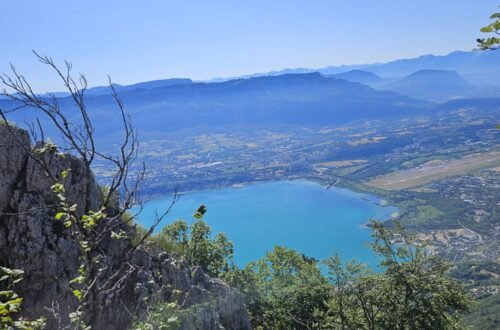
If Ardèche in Southeastern France Isn’t on Your List Yet, It Should Be.
I had been wanting to explore Ardèche for some time, so when a good friend and I finally had two days to do it, we knew we would have to be selective. There is far too much to see in one weekend, and trying to do everything would have defeated the point. We chose a handful of villages, left some room for walking and wandering, and knew that at some point we would head towards Villefort for the activity I was most looking forward to: the Via Ferrata above the lake. What I hadn’t expected was how much I would enjoy everything that happened in between.
For anyone unfamiliar with this part of France, Ardèche is a department in southeastern France, in the Auvergne-Rhône-Alpes region. It lies west of the Rhône Valley, roughly between Lyon to the north and Avignon and Nîmes to the south. Privas is its administrative capital, while Aubenas, Annonay and Tournon-sur-Rhône are among its other important towns. Its neighbours include Drôme, Gard, Lozère, Haute-Loire, Loire and Isère geography that helps explain the remarkable variety of landscapes you encounter as you travel through it.
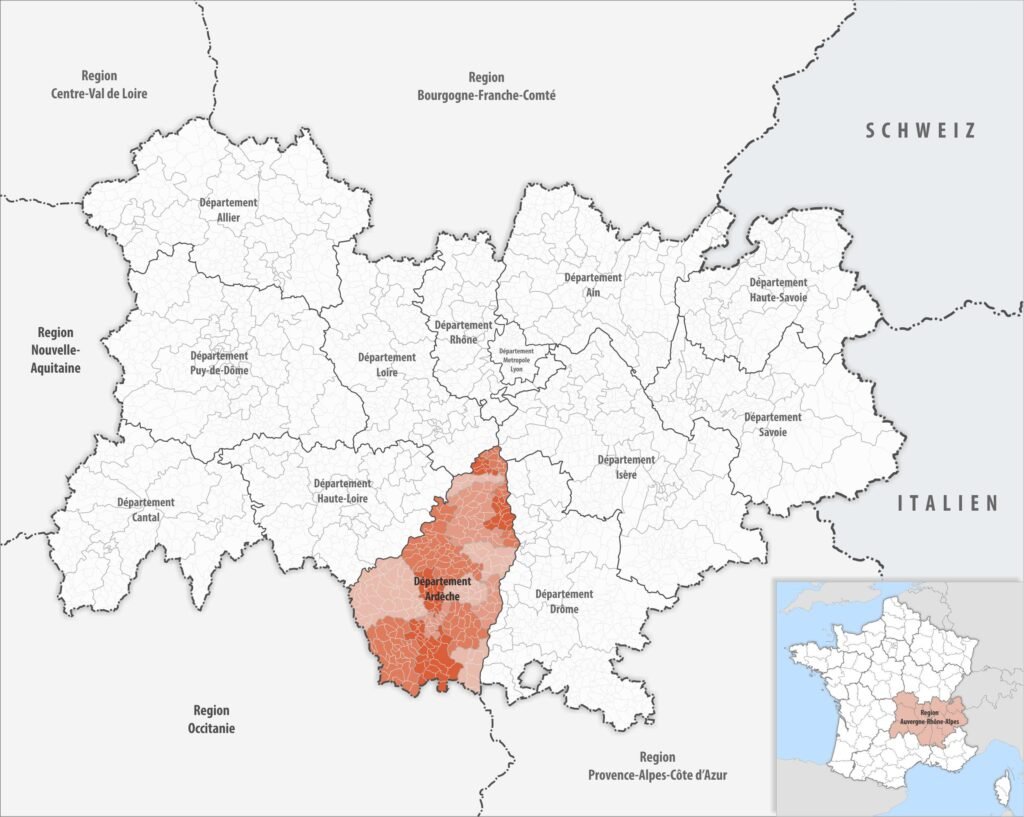
Our weekend took us mainly through southern Ardèche, where limestone villages, rivers, gorges and forests gradually lead towards the Cévennes. We would explore Vogüé, Labeaume, Balazuc and Ruoms, experience the Saturday market in Les Vans, and hike through the extraordinary limestone landscape of the Bois de Païolive before eventually crossing into neighbouring Lozère, where La Garde-Guérin and Villefort were waiting.
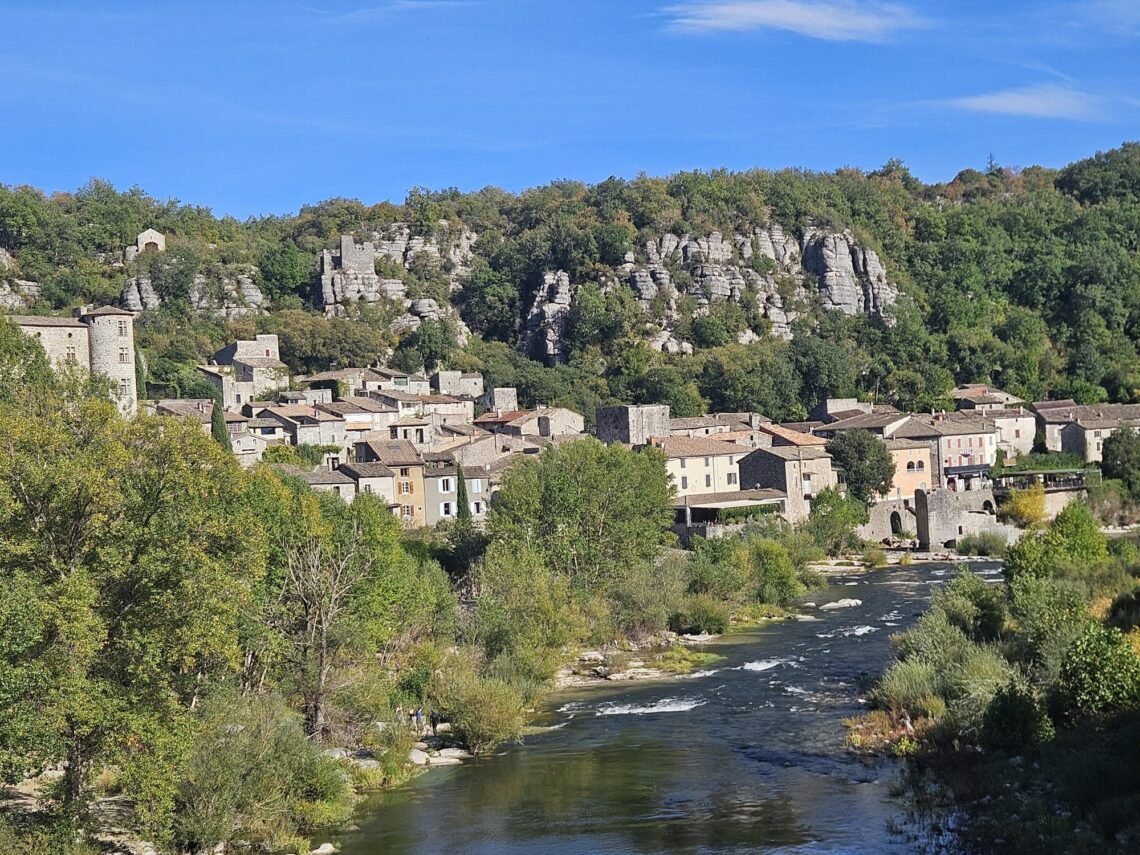
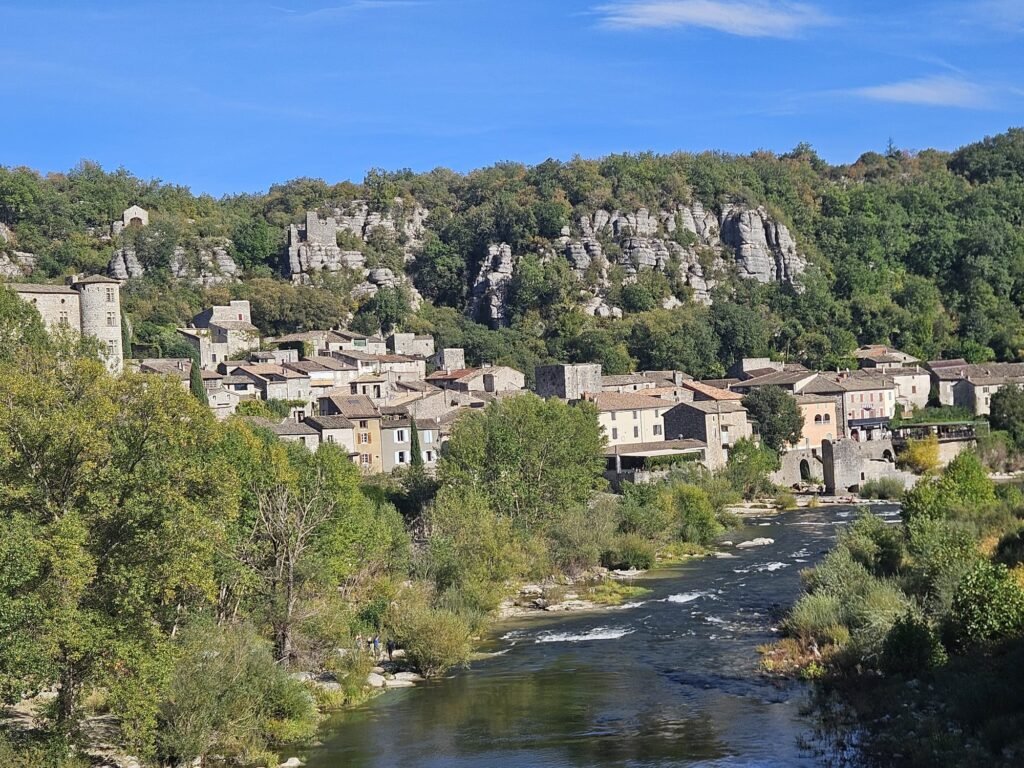
Our journey began in Vogüé, which turned out to be a rather good introduction to this part of France. The village sits along the Ardèche River, its pale stone houses gathered beneath limestone cliffs and the Château de Vogüé rising above them.The château has medieval origins, although much of what stands today was shaped during later centuries. Below it, narrow streets, vaulted passages and old stone houses make the village easy to explore on foot. Vogüé is one of those places where you quickly stop looking for a particular attraction and simply start walking. A passage looks interesting, so you follow it. A street climbs, so you climb with it. Eventually you find yourself looking back towards the river and wondering how people managed to build villages so beautifully into landscapes like this.
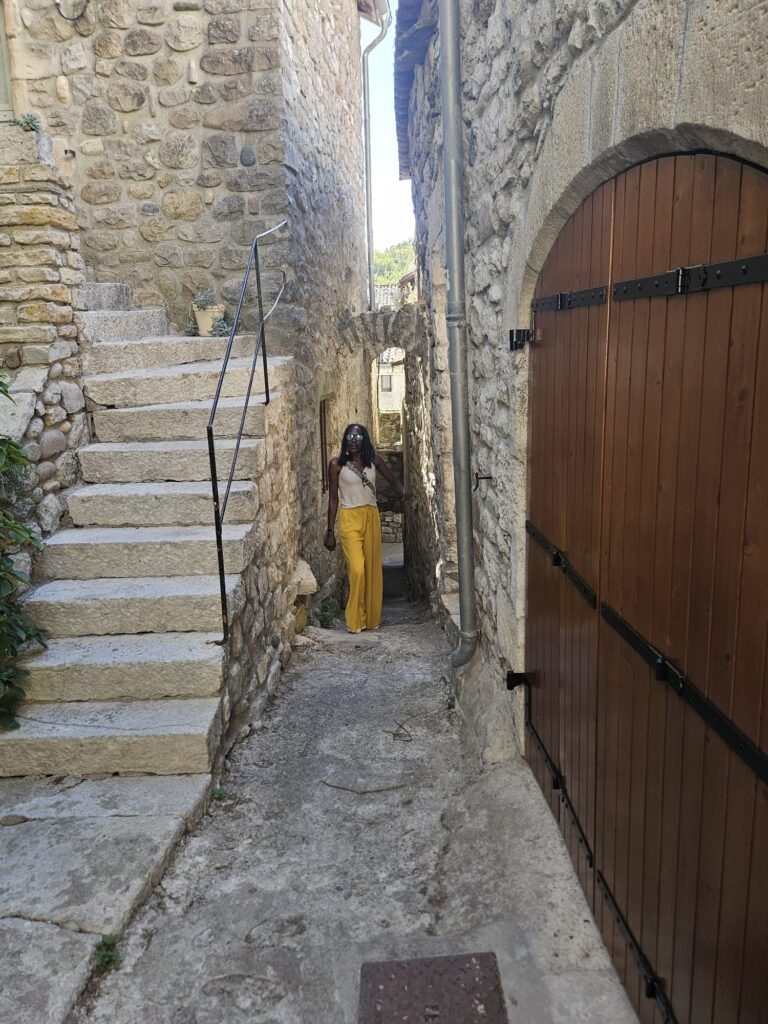
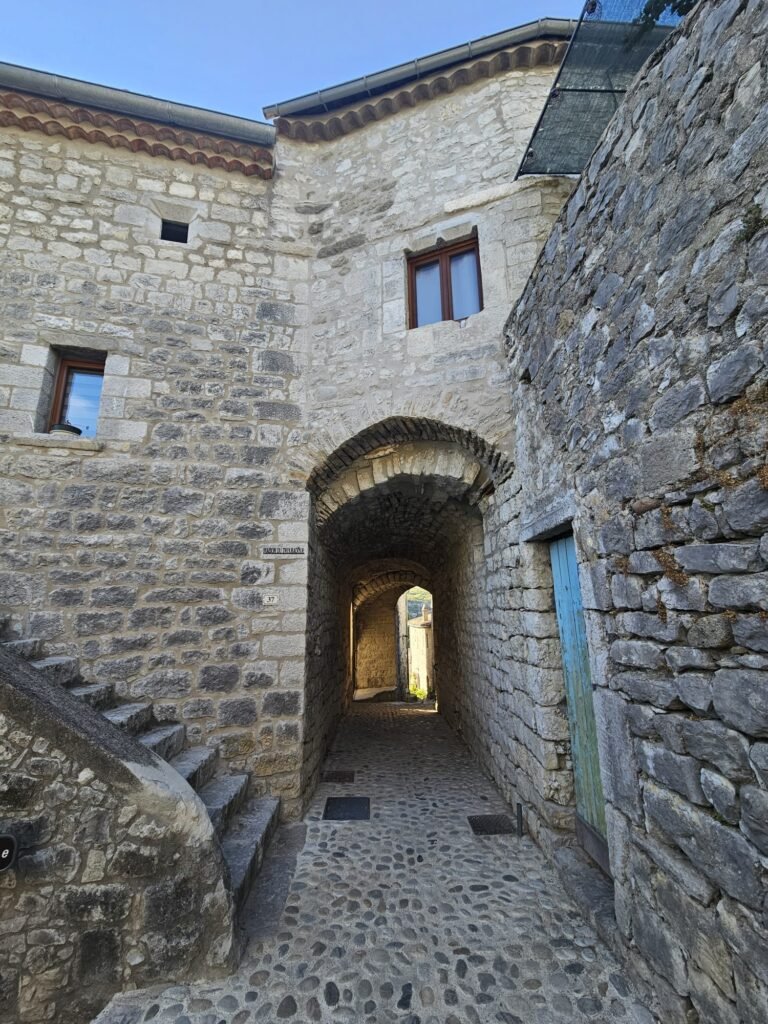
From Vogüé we continued to Labeaume, which felt altogether more intimate. The village is tucked beside the Beaume River beneath limestone cliffs, its houses and narrow paved lanes squeezed into the available space. Some of the passages are vaulted; others twist between buildings in ways that make you lose your sense of direction quite quickly. There is a much older human history here too: more than 140 dolmens have been identified across the commune, evidence that people were living, moving through and burying their dead in this landscape thousands of years before the village we see today existed. I liked knowing that, but what I remember most is simply wandering. We climbed steps without knowing where they led, ducked through passages and emerged into little corners we hadn’t intended to find. Sometimes the best thing about an old village is not knowing exactly where you are going.
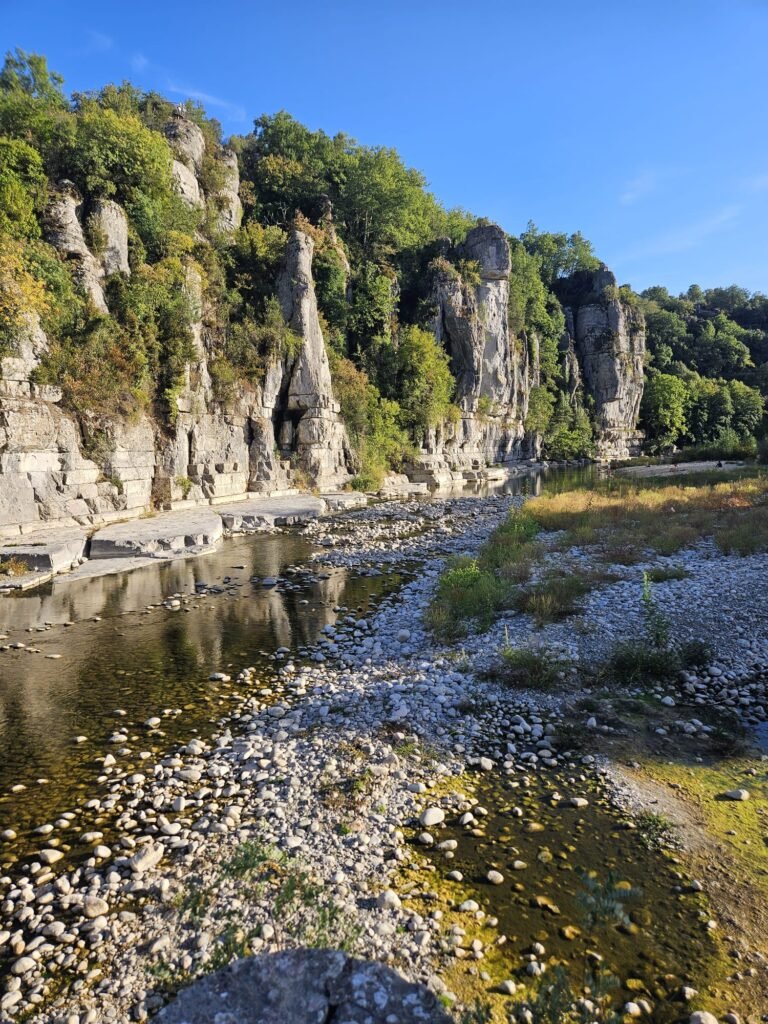
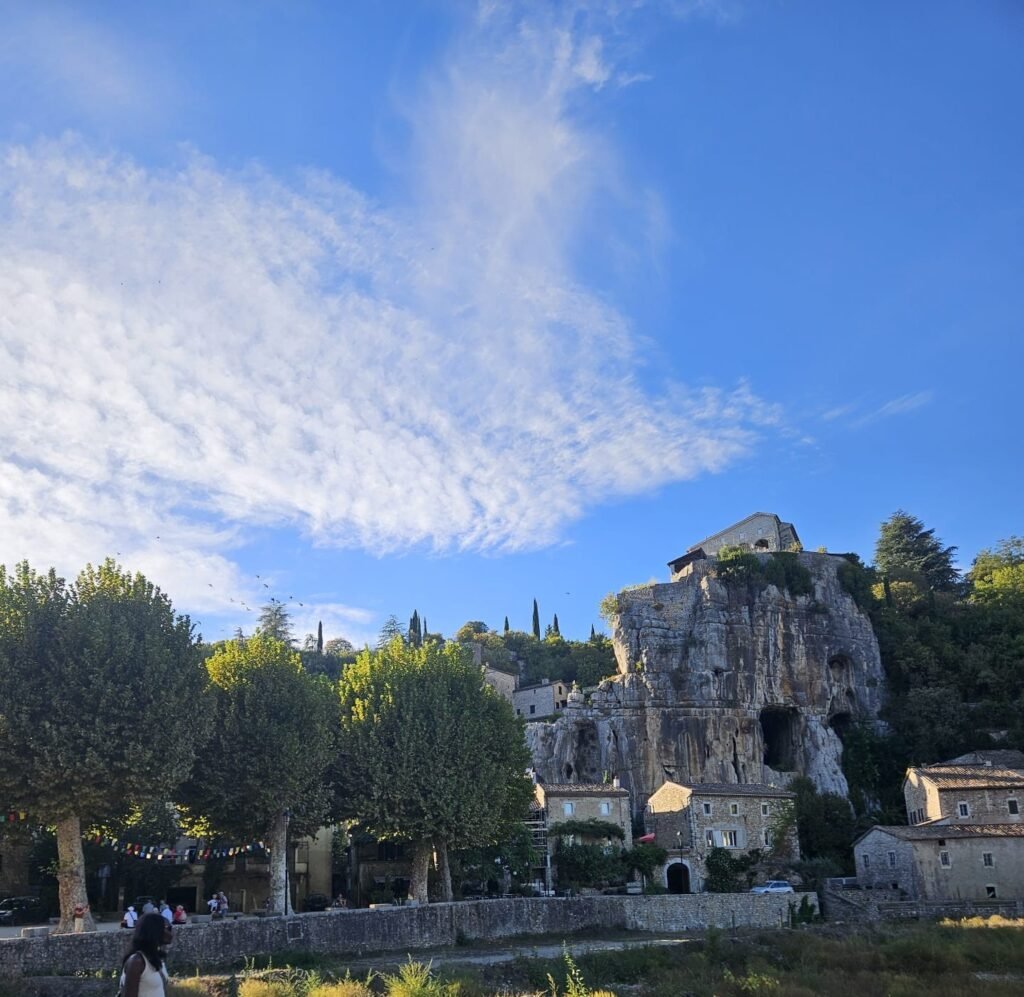
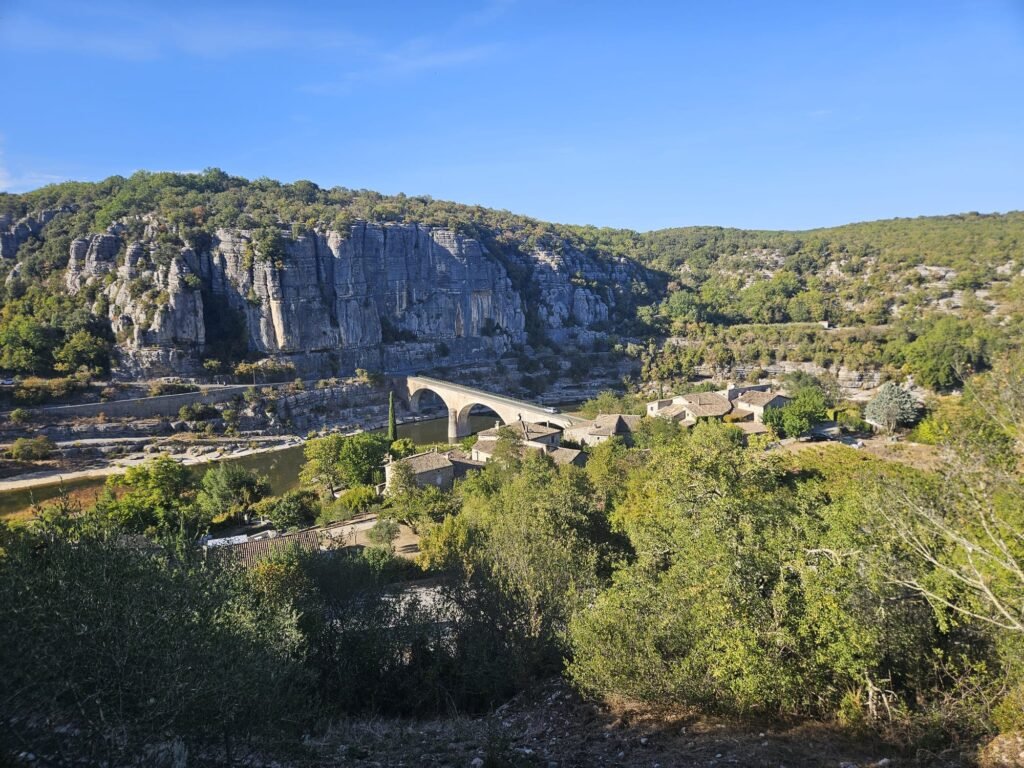
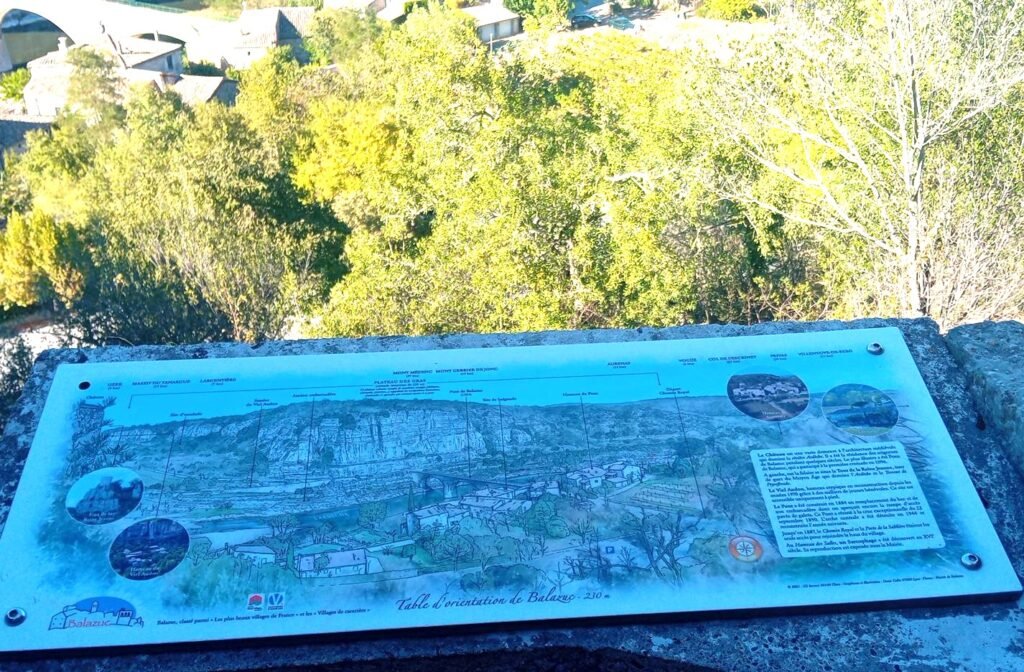
Balazuc was different again. It is more dramatic, built into the limestone above the Ardèche River, with steep calades, arches and stone houses seemingly stacked on top of one another. Its history stretches from prehistoric occupation through the Gallo-Roman period and into the Middle Ages, when the lords of Balazuc fortified the settlement. Parts of those medieval defences can still be seen. We made our way up to the Table d’orientation de Balazuc, at around 230 metres, where the rooftops fell away below us and the river curved through the landscape. I took photographs, of course, but it was also one of those views that eventually makes you put the phone away. Since moving to France, I have become increasingly drawn to places that do that to me. They make me stop.
We also visited Ruoms, another medieval settlement, but one that felt more like a working town than the villages we had just walked through. Ruoms developed around a Cluniac religious establishment towards the end of the 10th century, and sections of the defensive walls built during the Hundred Years’ War remain, along with several round towers. The local limestone also shaped the town’s history and economy. Yet what I liked was that none of this felt preserved behind glass. People still live their ordinary lives inside these old streets. That became one of the pleasures of the weekend: history was everywhere, but so was everyday life.
A Saturday Morning in Les Vans
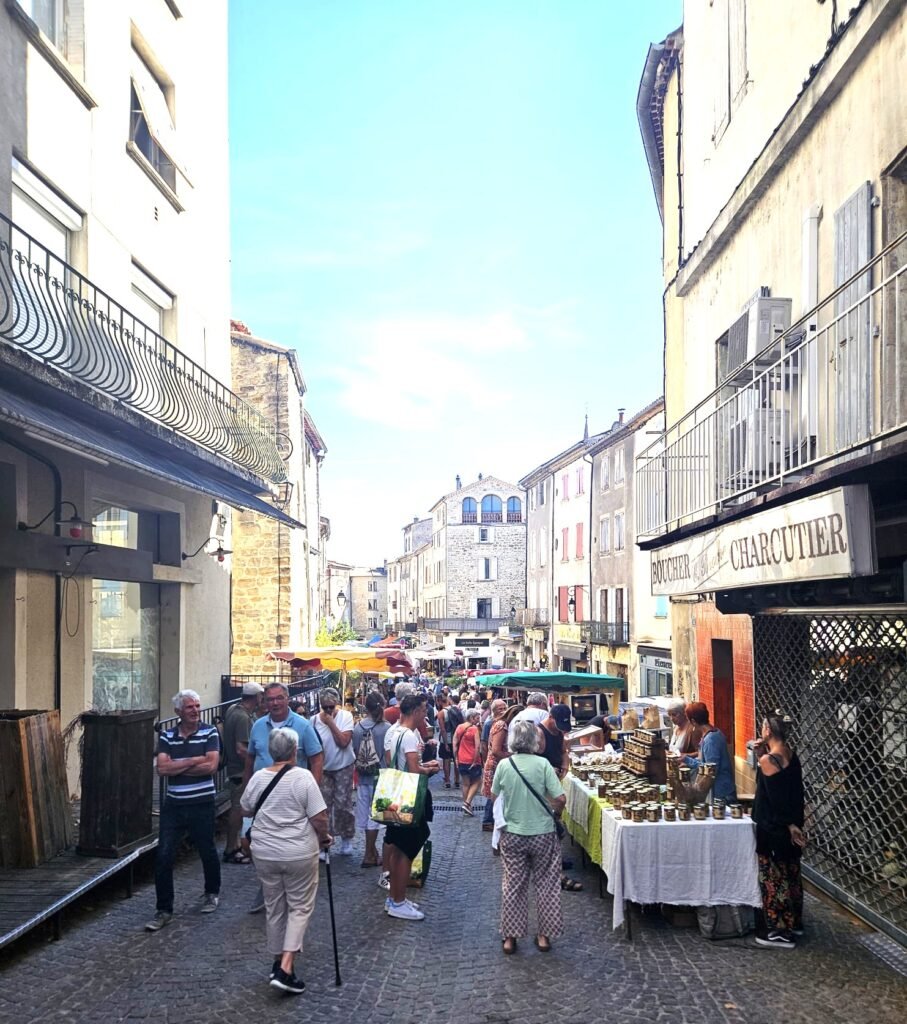
We saw that everyday life most clearly the following morning in Les Vans, where we went for the Saturday market. If you have ever been to a village market in France, you will understand why I enjoy them. They are ostensibly about buying things, but shopping is only part of what is happening. People stop to talk. Someone is discussing cheese while another person is choosing vegetables. There are clothes, local delicacies, crafts, produce and stalls selling things you hadn’t considered buying until five minutes earlier. For a few hours in the morning, roughly between nine and midday, the town becomes one large social gathering.
The market at Les Vans has been part of local life for centuries, and on a Saturday the historic centre is taken over by stalls and people. It felt authentic rather than arranged for visitors. We walked through the crowds looking at food and clothes and eventually became fascinated by a stall selling dried vegetables. I had never imagined some of these vegetables could even be dried. There were dried French beans, carrots and arrowroots among them, so naturally we bought some. Later that evening they came out for our apéro and were surprisingly good: crunchy, intensely flavoured and very easy to keep eating. Of all the things I expected to remember from Ardèche, becoming enthusiastic about dried French beans was not high on the list.
After the market, we exchanged streets and stalls for something much wilder: the Bois de Païolive, near Les Vans. This ancient woodland is one of the landscapes that stayed with me most from the weekend. Here, trees grow among great masses of Jurassic limestone that have been shaped by water and erosion over millions of years. The result is a strange natural labyrinth where forest and rock seem to have become entangled with each other.
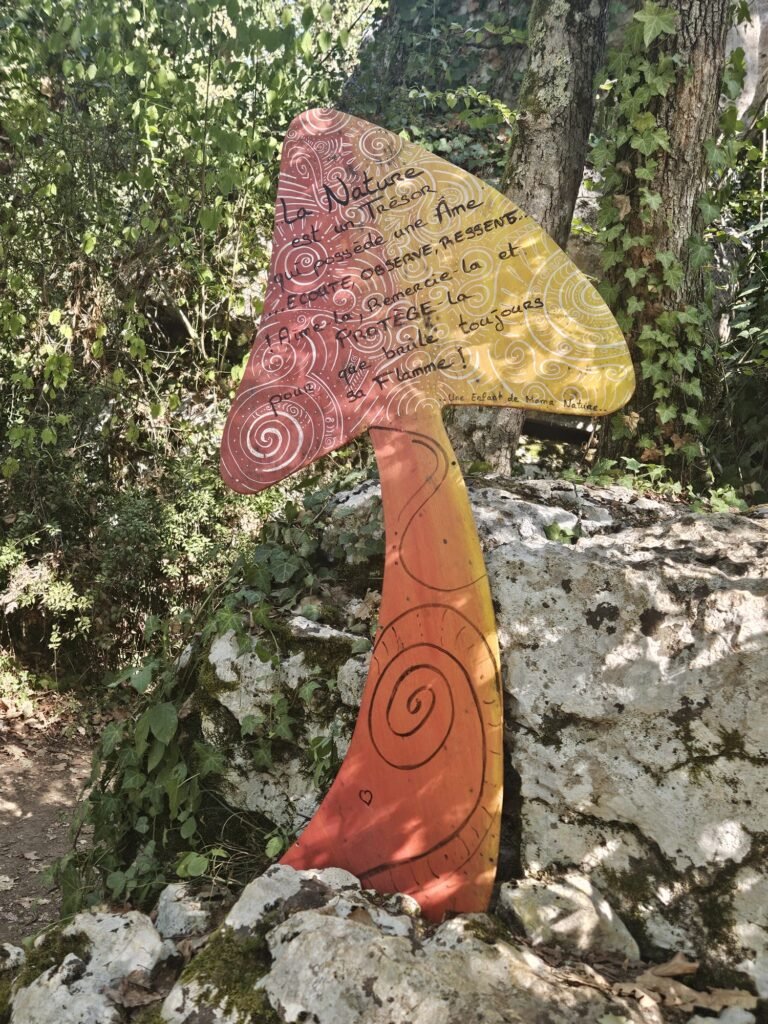
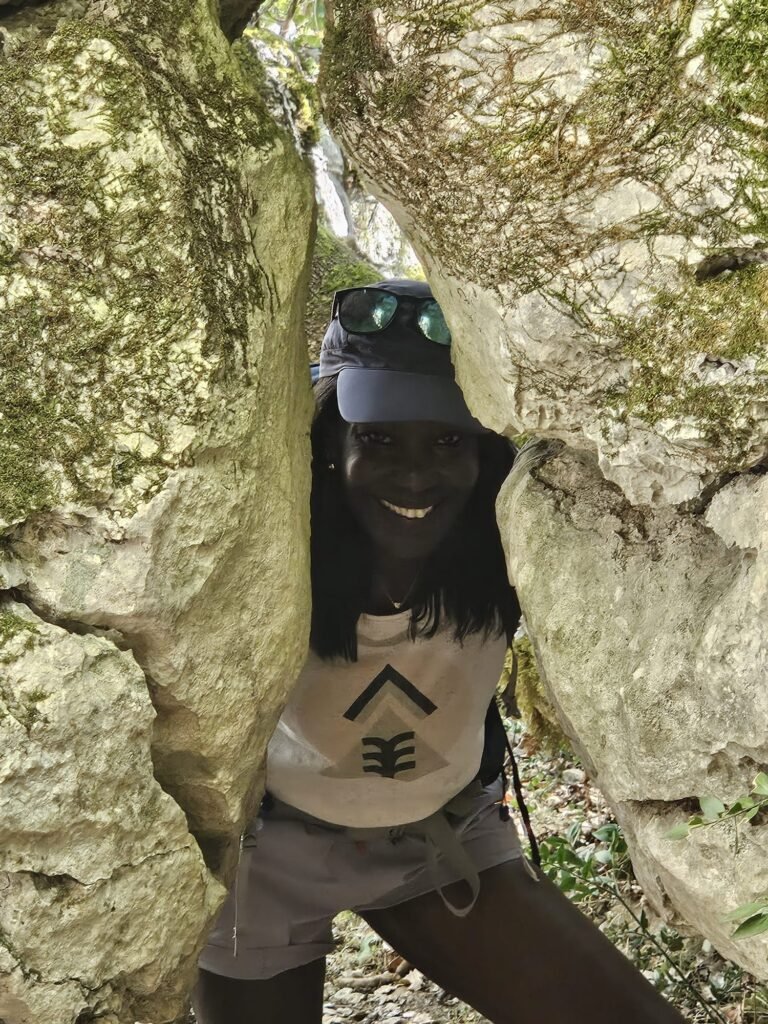
Walking through it was playful in places. We squeezed between rocks, bent beneath overhangs and followed paths through formations that seemed to change shape depending on where you stood. At one point there was a carved mushroom trail marker; elsewhere the limestone formed shapes that invited the imagination to take over. Then the trees would open and give us glimpses towards the rugged country around the Gorges du Chassezac and the Cévennes. It was completely different from the manicured image people sometimes have of the French countryside. Païolive felt ancient and slightly mysterious, and I loved it for that.
By then we were moving away from the villages of southern Ardèche and towards the Cévennes. The landscape opened, the roads became quieter and our weekend gradually crossed into neighbouring Lozère. Administrative boundaries don’t mean very much when you are travelling like this; the landscape simply continues. Somewhere along the way we reached a village whose name I later forgot, even though I hadn’t forgotten anything about the place itself. It was La Garde-Guérin.
A Night Above the Gorge
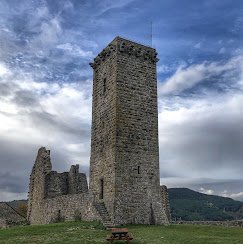
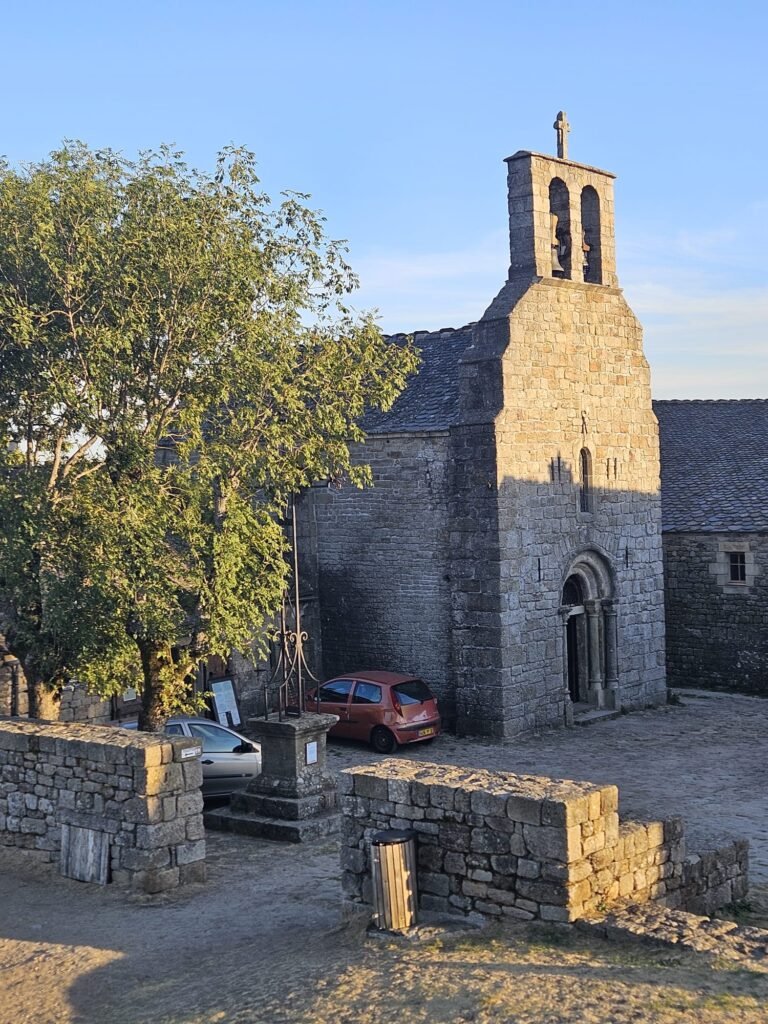
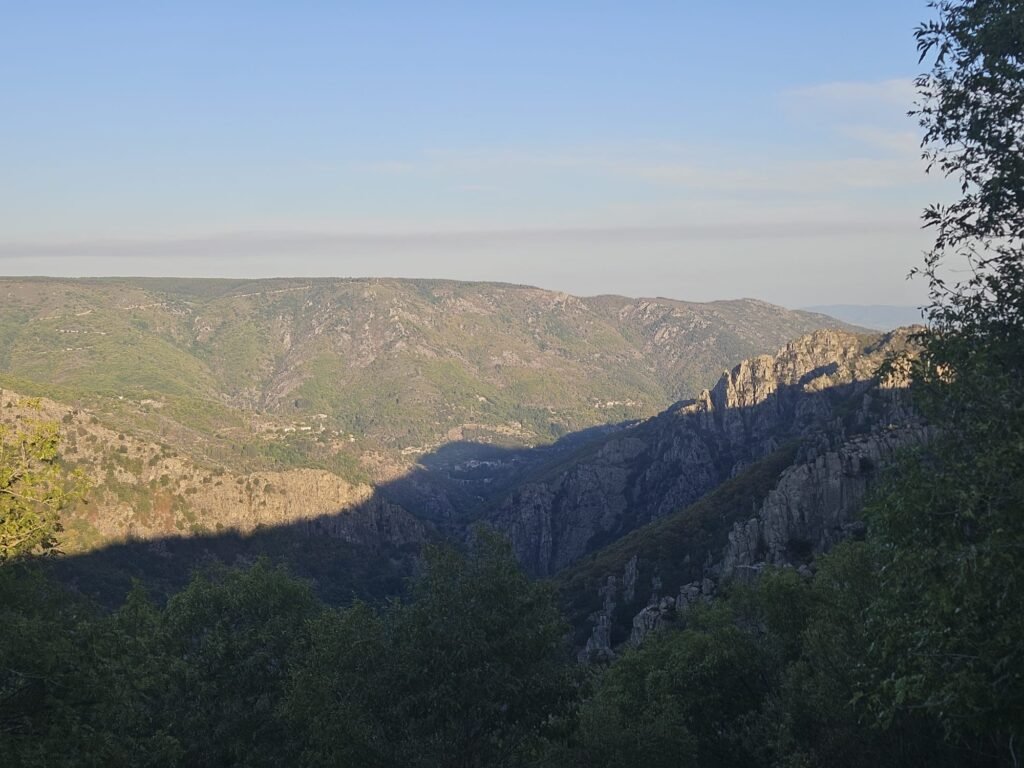
La Garde-Guérin sits high above the Gorges du Chassezac, and arriving there feels a little like stepping backwards in time. The fortified medieval village developed along the Régordane route, an important old road linking the Massif Central with the Mediterranean. In the Middle Ages, knightly families known as pariers were associated with protecting travellers and goods passing through this difficult landscape. The stone houses remain gathered around the old streets, dominated by a medieval tower. Which was quiete a task to climb.
The staircase eventually brought us out to a 360-degree view that justified every step. From the top we could see across the plateau, forests and mountains, with the Chassezac cutting through its gorge below. After spending much of the weekend walking through villages and looking up at their towers and cliffs, there was something satisfying about finally being above everything, looking out across the landscape that connected them.
We liked the area enough to stay. Near the golf course, not far from La Garde-Guérin, there is a designated place where camper vans can stop, and that became home for the night. There was nothing elaborate about it, which was part of the pleasure. We had the van, the quiet of the plateau and the dried vegetables we had bought that morning in Les Vans, which made their appearance during our apéro. It had been a full day, but it didn’t feel rushed. We had only two days and had chosen carefully how we wanted to spend them. Sitting there that evening, I felt we had chosen well.
The next morning we drove towards Lac de Villefort. Before tackling anything involving harnesses, steel cables and cliffs, however, coffee seemed sensible.
We stopped at Accueil Pêche et Nature du Lac, a café and restaurant beside the water with a terrace overlooking the lake. It is also very much a place for fishermen, who come for permits, bait and equipment before heading onto the lake or settling along its banks. Sitting there over coffee, watching the water and the fishermen coming and going, it was difficult to reconcile the peacefulness of the scene with what we were about to do. We liked the place immediately and decided that when we finished the Via Ferrata, we would come back for lunch. It would be our final stop before heading home. We left the coffee, the terrace and the reassuringly horizontal ground behind.
The Mountain Didn’t Make Me Fearless
I had seen photographs of the Via Ferrata du Lac de Villefort, but photographs are rather poor at communicating what it feels like to find yourself attached to the side of a rock face with the lake below you. From a distance, you see people moving across a cliff. Once you are on it, the experience becomes much more immediate. There is the rock in front of you, the steel cable running beside you, your harness, your carabiners and the awareness that the beautiful blue water you had admired over coffee is now a considerable distance beneath your feet.I was afraid. I think it is important to say that because the interesting part of the experience wasn’t that fear somehow disappeared. It didn’t. What surprised me was how calm I remained in its presence.
My friend noticed it too. Afterwards, he told me he had been amazed by how calm I was. I have thought about that comment since because I know that calmness belonged to me, but I also know I wasn’t creating it entirely alone. He was steady and focused throughout. There was no panic in his energy nor his voice and no attempt to take over. He was simply present, reassuring and concentrating on what was in front of us. I trusted him, and that trust gave me room to concentrate on what I needed to do rather than on everything that could possibly go wrong.
There is an important difference between trusting somebody and expecting them to carry you. Nobody could move my feet for me on that rock. Nobody could make my hands release the cable and reach for the next hold. Nobody else could move my carabiners past each anchor point. Every meter still required me to decide to move. But sometimes strength is relational. Someone else’s steadiness can create enough space for you to discover your own.
There were sections where I couldn’t see much of what lay ahead. I might see the next foothold, the next section of cable and perhaps the next metre or two. Initially, I wanted to understand where the route was going. How difficult would the next section be? How far did we still have to go? What was waiting around the rock? Was there going to be a zipline? Eventually I stopped asking myself those questions. The mountain wasn’t giving me the whole route. It was giving me the next move. So that was what I dealt with. Move one carabiner past the anchor. Then the second. Check my foot. Shift my weight. Move forward. Breathe. Then do it again. It sounds almost mundane written down. Up there, it felt profound.
You see, we spend so much of life trying to see the entire route before we are willing to move. We want to know where a decision will take us, whether a relationship will work, whether we will make a difference at work, whether a change will be worth it, whether we will succeed, whether we will be okay. We want certainty before we put our weight onto the next foothold.
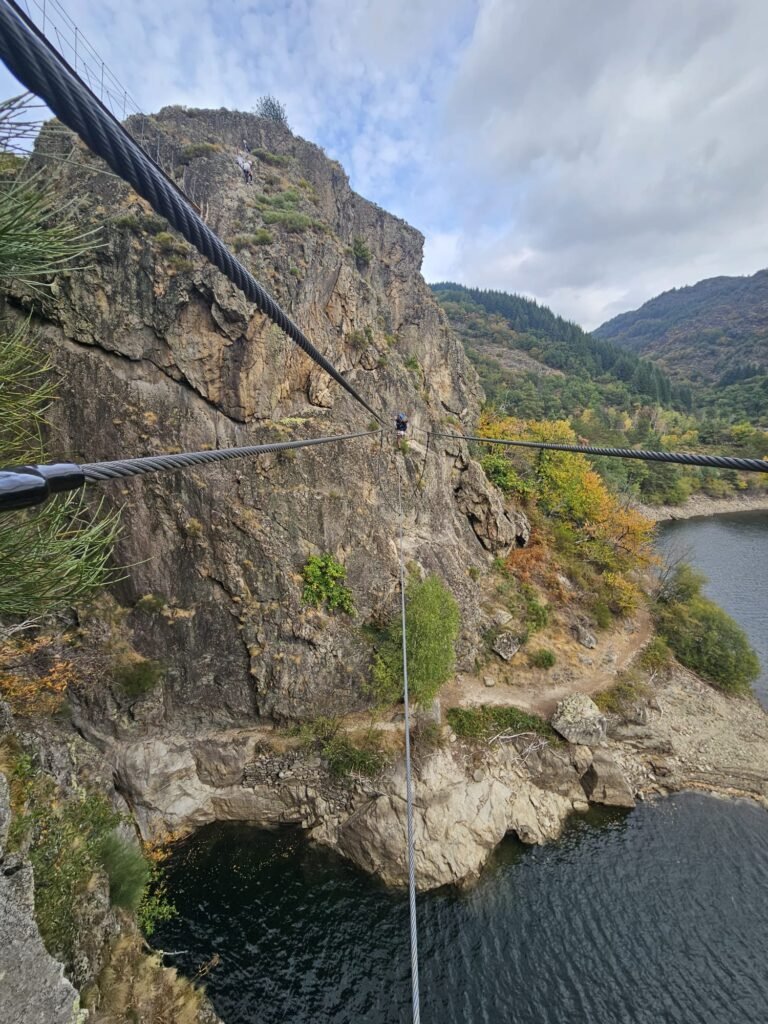
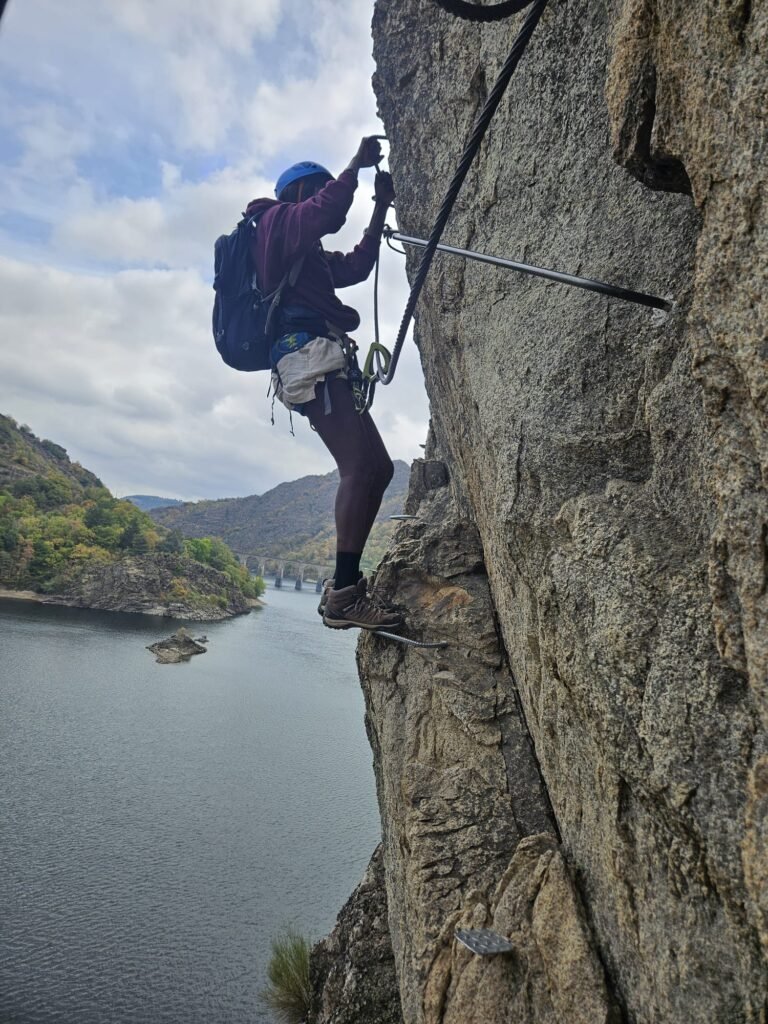
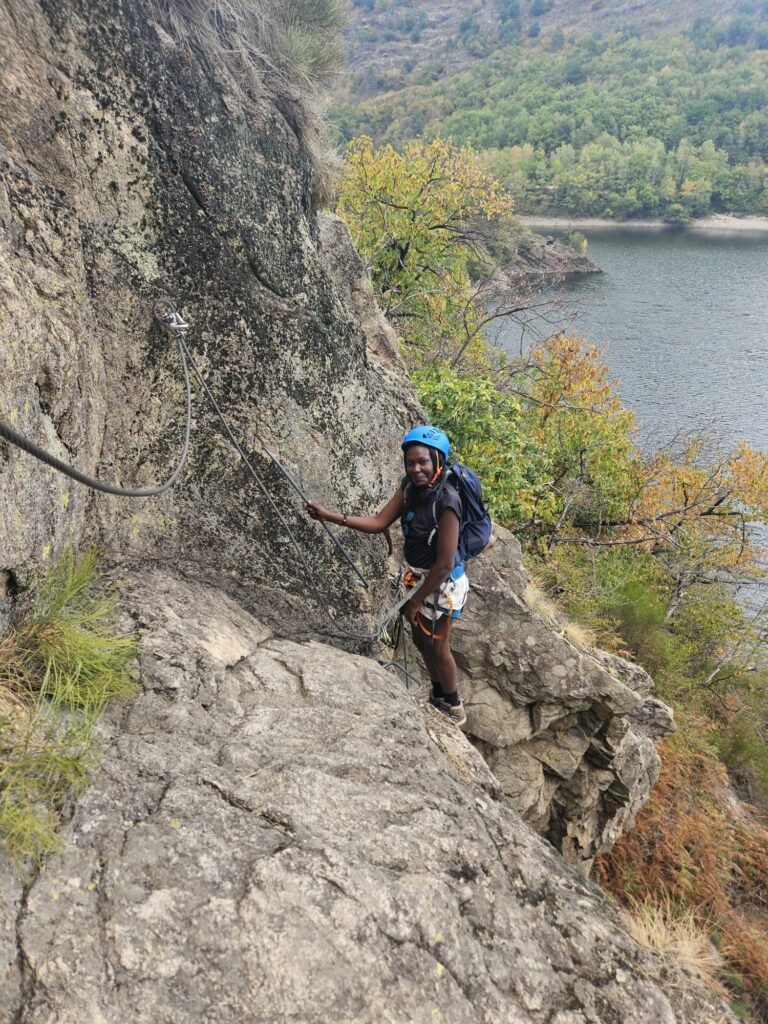
But sometimes certainty isn’t available. Sometimes all you can see is the next metre.
And perhaps courage is not feeling ready for everything that lies ahead. Perhaps it is being sufficiently present to deal with what is immediately in front of you. That was what the Via Ferrata taught me about fear too. I didn’t need to conquer it. I didn’t need to wait for it to leave. Fear and courage could exist in exactly the same body at exactly the same moment. I could be frightened and still move. I could trust another person without surrendering responsibility for myself. I could look down, understand perfectly well how high I was, take a breath and move my carabiner to the other side of the anchor. I didn’t come off that mountain feeling fearless.I came off understanding that fearlessness had never been the requirement.
Back to the Lake
When we finished, we returned to Accueil Pêche et Nature du Lac, exactly as we had decided over coffee that morning. This time we came for lunch. I loved the symmetry of it. A few hours earlier we had sat at the same lake looking towards the landscape we were about to enter. Now we were back after having moved across the cliffs above it. The people were still there. The water was still calm. The hills hadn’t changed. But my relationship with that landscape had. We ordered lunch and stayed for a while. There was no need to squeeze in another village or attraction before leaving. We had spent our two days exactly as we wanted to: selectively, following the places and experiences that interested us most. Returning to the lake felt like a way of honoring the journey before beginning the drive home.
And what a journey it had been.
We had started beneath the château at Vogüé, wandered through the hidden lanes of Labeaume, stood above the Ardèche at Balazuc and walked through the medieval streets of Ruoms. We had joined the Saturday buzz of Les Vans, discovered dried vegetables we would later eat during our apéro and squeezed our way through the ancient limestone landscape of the Bois de Païolive. We had followed the road towards the Cévennes, crossed into Lozère, climbed the medieval tower of La Garde-Guérin and slept nearby overlooking a landscape carved by the Chassezac.
These villages gave me history. The market gave me a glimpse of local life. Païolive reminded me how strange and beautiful nature can be when we leave it enough time. La Garde-Guérin gave me one of those views that stays in your mind long after you have descended the tower. But the Via Ferrata gave me something else. It reminded me that trust and independence are not opposites. That another person’s calmness can strengthen your own without taking anything away from you. That courage does not require fear to disappear. And that perhaps we waste too much energy demanding to know the entire route when life is only asking us to make the next good move.
The mountain reminded me that I can be afraid, I can trust, I can stay calm and keep moving anyway.
Two days could never show us everything Ardèche and this edge of the Cévennes have to offer. We knew that before we arrived. But that wasn’t the point. We had two days, we chose carefully, and somehow those two days gave us medieval villages, markets, forests, gorges, mountains, good food, laughter, a little fear and a reason to return. So if Ardèche isn’t on your list yet, perhaps it should be. If one morning you find yourself drinking coffee beside Lac de Villefort, looking towards the cliffs and wondering whether you are brave enough for whatever comes next, remember, you don’t need courage for the whole mountain.

You May Also Like
Discovering the French Mountains as an African.
Winter Break Between the French Alps and Alsace