Healthcare in France- What Newcomers Don’t Expect And What You Should Know
What it really feels like to navigate the French healthcare system as a newcomer, from access and expectations to the reality behind the Carte Vitale.
When Health Changes Everything…….
You can be settling into a new country, learning the language, navigating systems, building a life step by step. But the moment your health is shaken, everything else fades into the background. In that moment, nothing matters more than being able to access care, to be understood, and to feel safe in a system you are still learning.
It is like standing on unfamiliar ground and suddenly needing it to hold you.
The Promise of the System
Before moving to France, I had often heard that the healthcare system here is one of the best in the world. And in many ways, that is true. The system is structured, accessible, and offers a level of protection that can feel reassuring, especially coming from places where medical care can quickly become a financial burden and even bankruptcy.
Even as a student, some visas include access to healthcare, with subsidies that cover a large portion of medical costs. I have a friend who came to France as a student and often speaks about the relief she felt knowing she did not have to worry about medical bills. She was even able to get new glasses through the system, something that would have been much more difficult to afford elsewhere.
That sense of security is real.
But living inside the system is different from hearing about it.
When You Need Care Urgently
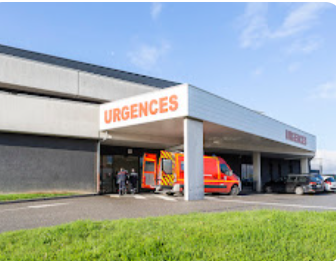
I experienced this most clearly after returning from work in Congo, when I became seriously ill. I knew something was wrong. My body was not responding the way it should, and I needed care quickly. The system, however, moved differently. There were steps to follow, explanations to give, and a certain pace that did not always match how I was feeling. It required effort to communicate urgency, to insist on being heard in a system designed to be measured and structured.
Eventually, I was admitted and spent the night in the hospital.
And I have to say, the care I received was excellent. Attentive, professional, and reassuring in a way that allowed me to finally rest. In that moment, you understand what the system is capable of when you are fully inside it.
The Rhythm of Healthcare in France
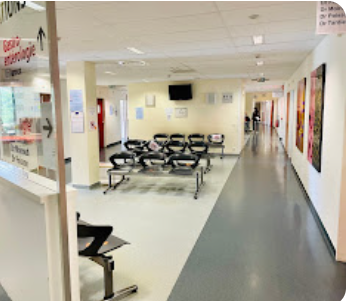
But that experience also revealed something important. Healthcare in France about quality and rhythm. Access exists, but it does not always come quickly. Finding a general practitioner is usually manageable, you narrow down to proximity and where you stay, you get on platforms like Doctolib. But when it comes to specialists, the reality can be different. Waiting weeks, sometimes months, is not unusual. You begin to understand that while the system is strong, it operates on its own timeline, one that does not always align with your sense of urgency.
What Is Covered and What Is Not by the carte Vitale
There is also the question of what is fully covered and what is not. Most essential healthcare costs are reimbursed, especially once you are registered. But certain areas, such as dental care and optical services, can become expensive if you do not have complementary insurance.
Dental care, in particular, can be surprisingly costly. Replacing a tooth, for example, can cost up to 2,500 euros. A portion may be covered by the state, but the rest depends on your insurance, or comes directly out of pocket. These are the details you only fully understand once you begin living here.
A Different Approach to Treatment
Over time, you also notice a different approach to treatment.
Doctors often begin with simple solutions. Rest. Basic medication. Time. At first, this can feel frustrating, especially if you are used to more immediate or aggressive treatment. But gradually, you begin to see the philosophy behind it, one that values careful intervention rather than immediate escalation. And yes, you become very familiar with certain constants, like Doliprane.
Living Outside the Cities
Living in the countryside brings a quieter relationship with the system.
There is care available, pharmacies are reliable, and pharmacists are often the first point of contact for everyday concerns. They can guide you, advise you, and in many cases provide immediate support for minor issues.
But when it comes to more specialized care, you begin to feel the distance. Appointments may require travel to larger towns or cities, and waiting times can stretch even longer. It is not a lack of healthcare, but a reminder that access is not always immediate or nearby. It requires planning, patience, and sometimes simply adjusting your expectations.
Understanding the Carte Vitale
For those navigating the system, one of the most important steps is obtaining the Carte Vitale.
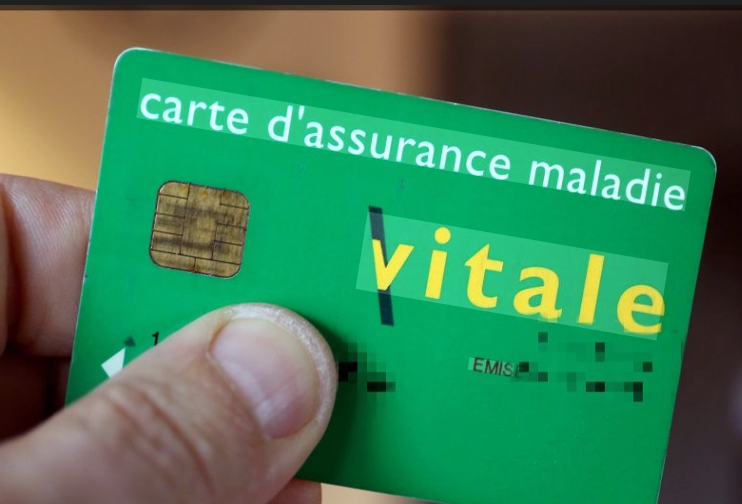
This small green card is what allows the system to recognize you. It links you to the national health insurance and enables automatic reimbursement for most medical expenses. But getting it is a process. As a student or resident, you must first register with the health system, usually through the Assurance Maladie platform. This involves submitting several documents and waiting for your file to be reviewed.
Once your registration is accepted, you are assigned a social security number. This number allows you to access care and begin receiving reimbursements, even before the physical card arrives. Only after this step can you apply for the Carte Vitale itself. The process can take several weeks, sometimes longer, and requires patience. In the meantime, you often pay upfront and are reimbursed later.
Over time, once everything is in place, the system becomes easier to navigate. Appointments feel less stressful, reimbursements are smoother, and the overall experience becomes more predictable.
Finding Your Place Within the System
Over time, you begin to see that healthcare in France reflects something larger about life here.
It offers security, but asks for patience. It provides access, but requires you to learn its language, its expectations, and its pace. And in many ways, that mirrors the broader experience of living in the diaspora. You arrive thinking you need to understand a system. But what you are really learning is how to exist within it. How to trust it, question it, adapt to it, and when necessary, speak up within it.
Because when it comes to your health, you cannot remain on the outside. You have to find your place within it, and learn how to stand there with confidence, even when the ground once felt unfamiliar.
Below is a list of documents required to register and obtain a Carte Vitale
- Valid passport or national ID
- Valid visa or residence permit (titre de séjour)
- Proof of enrollment (for students) or employment contract
- Birth certificate (translated into French by a certified translator)
- Proof of residence in France (utility bill or attestation d’hébergement)
- Bank account details (RIB)
- Completed registration form via the health insurance platform
- Passport-sized photo (for the Carte Vitale card itself)





3 Comments
Maha
Merci beaucoup pour cet nouvelle article Lemeria . Je le trouve super, il englobe tout ce qu’on peut savoir sur la santé et ça m’à beaucoup aidé. Continue c’est vraiment super
diasporaunfolding@gmail.com
Merci Maha.
diasporaunfolding@gmail.com
Merci beaucoup pour ton message, ça me touche vraiment 😊 Je suis très contente de savoir que l’article t’a été utile et qu’il a pu t’aider. C’est exactement pour cela que j’écris, partager des informations concrètes et accessibles qui peuvent vraiment servir au quotidien.
Merci encore pour ton encouragement, ça motive énormément à continuer.