Three Days in the Beaufortain: Mountains, a Campervan and the Joy of Going Back.
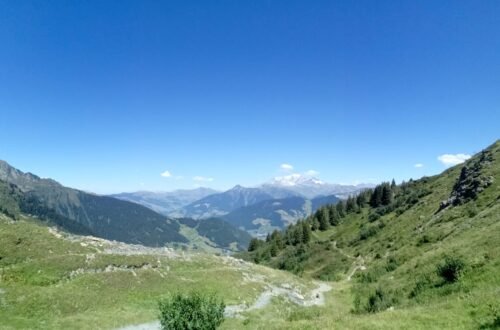
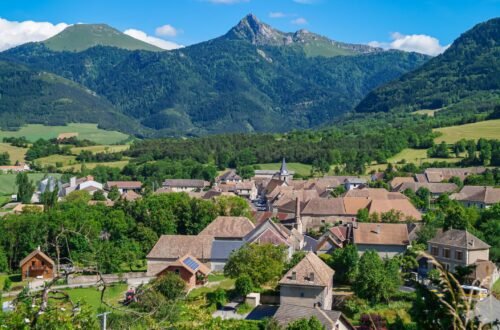
There are mountains that demand to be conquered, and there are mountains that invite you to belong. The Beaufortain belongs to the second category. Nestled in Savoie in the northern French Alps, within sight of the Mont Blanc massif and close to the Vanoise, the Beaufortain remains surprisingly discreet beside some of its more famous Alpine neighbours. Perhaps that is part of its charm. It doesn’t rely on fame to leave an impression. It seduces slowly.
This is a landscape shaped as much by people as by nature. Generations of farmers, shepherds, cheesemakers and mountain communities have left their mark here. Tarine and Abondance cows graze on high pastures. And the cheese that carries the region’s name, Beaufort, is inseparable from this landscape. I often wonder whether that is why this place feels so different. There is a generosity in these mountains. They create room for silence, long conversations, laughter and the kind of moments that rarely fit neatly into photographs.
[Two weeks earlier], I had left the Beaufortain after a solo hike to Col de la Bâthie knowing I would return. This time, I wouldn’t be alone. I would be sharing these mountains with people I have come to admire deeply, whose kindness, humanity and warmth have reminded me that sometimes it is not only the destination that transforms us, but also the people with whom we intentionally choose to experience it.
Before leaving after that first trip, someone had whispered into my ear: “It’s good to hike alone. But to experience the mountains with someone by your side… that’s something else entirely.”
At the time, I smiled. Three days later, after sleeping beside an Alpine lake, crossing mountain passes, walking beneath some of the most recognisable peaks of the French Alps and getting thoroughly lost in conversation, I understood exactly what those words meant.
Friday: A Night at Lac de Saint-Guérin
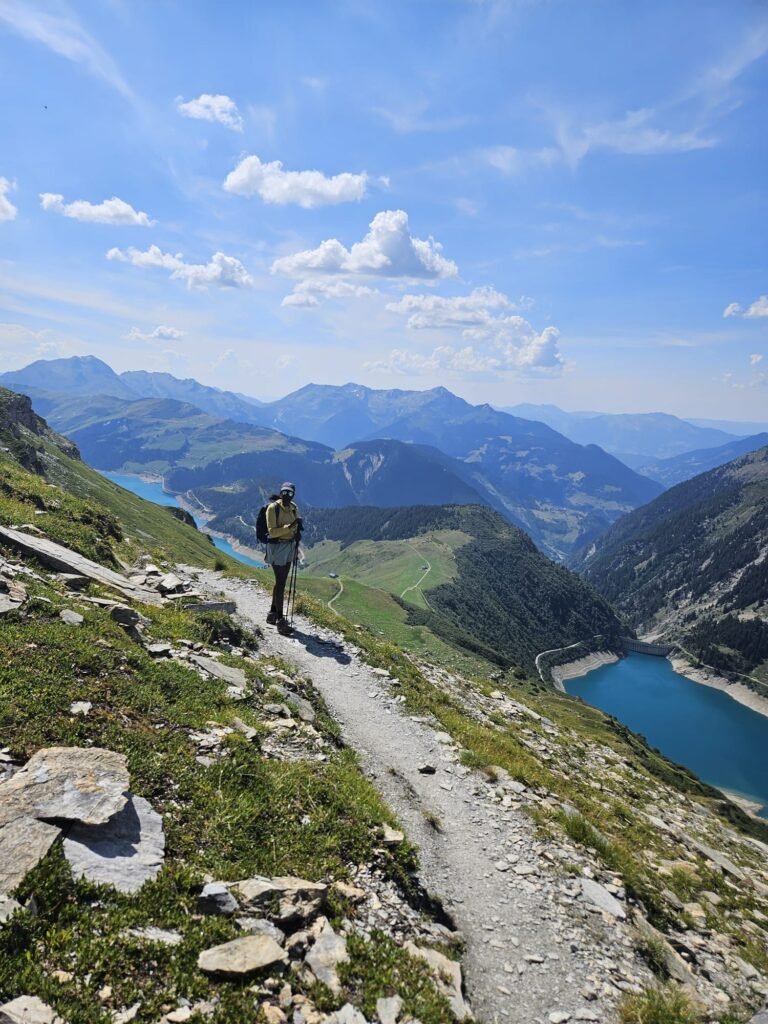
Our weekend began at Lac de Saint-Guérin, above Arêches-Beaufort, at approximately 1,557 metres.
Saint-Guérin is beautiful, but it is more than a picturesque mountain lake. The reservoir forms part of the important Roselend–La Bâthie hydroelectric system, together with Roselend and La Gittaz. Its dam was constructed between 1957 and 1961 and holds around 13 million cubic metres of water. The wider hydroelectric complex is an important piece of infrastructure for the region.
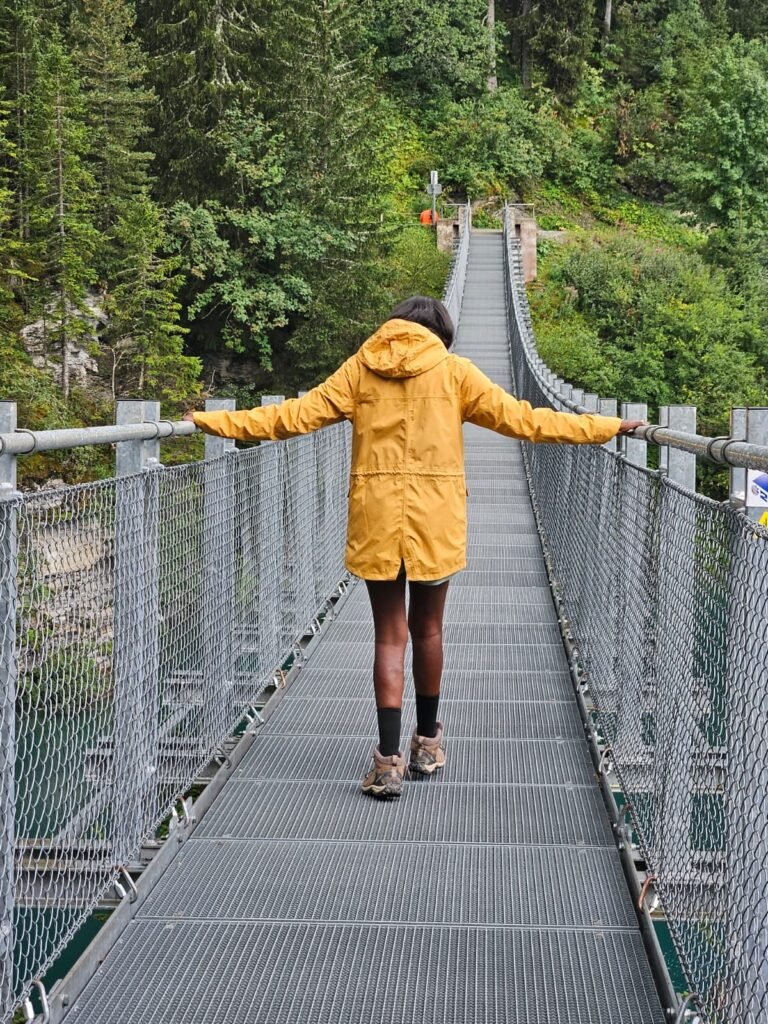
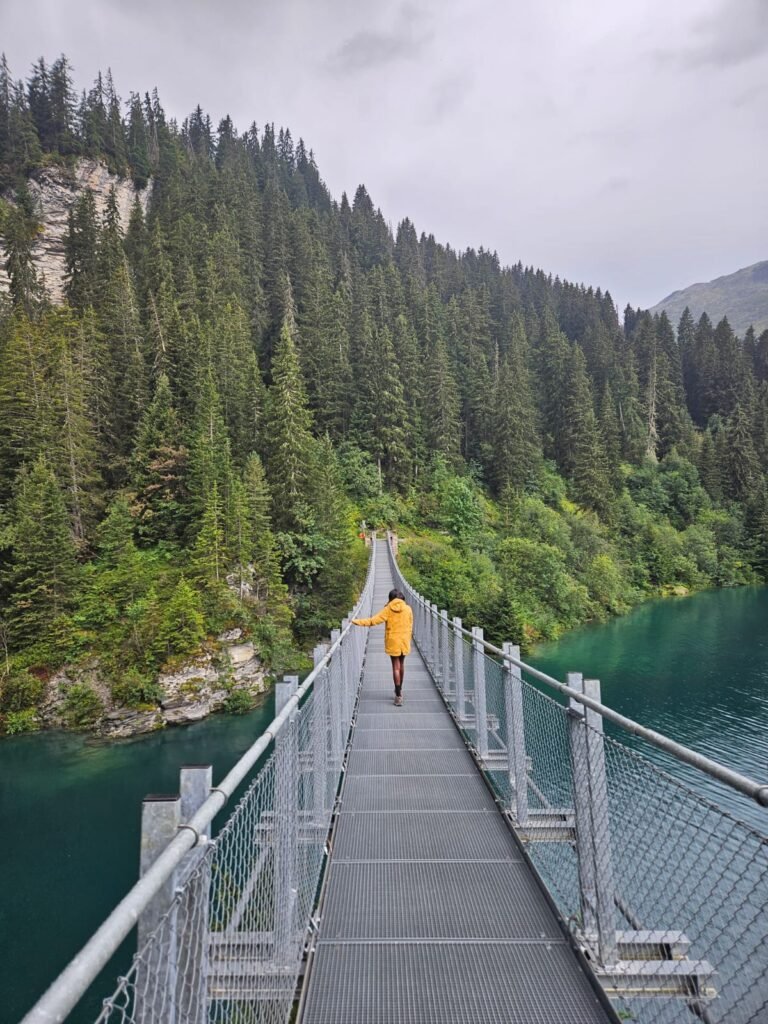
There is history beneath that water too. Saint Guérin was traditionally regarded as a protector of livestock, and before the dam existed, much of this landscape was mountain pasture. The pastoral tradition remains visible today in the alpages surrounding the reservoir. Perhaps the most recognisable feature for visitors is the 83-metre Himalayan footbridge, suspended more than 20 metres above the water. Crossing it with the forest and turquoise-green lake beneath you is worth the visit on its own.
Our original plan was to camp. The Beaufortain, however, had other ideas. The rain came. The temperature dropped dramatically. Suddenly, pitching a tent beside an Alpine lake seemed considerably less ideal than it had sounded while planning the weekend. Fortunately, my friend had arrived extraordinarily well prepared with a van that could be converted with a mattress for sleeping and even a little kitchenette. For years, sleeping in a campervan had been one of those small adventures sitting quietly on my list of things I wanted to experience. I have dreamed of owning one since moving to France.
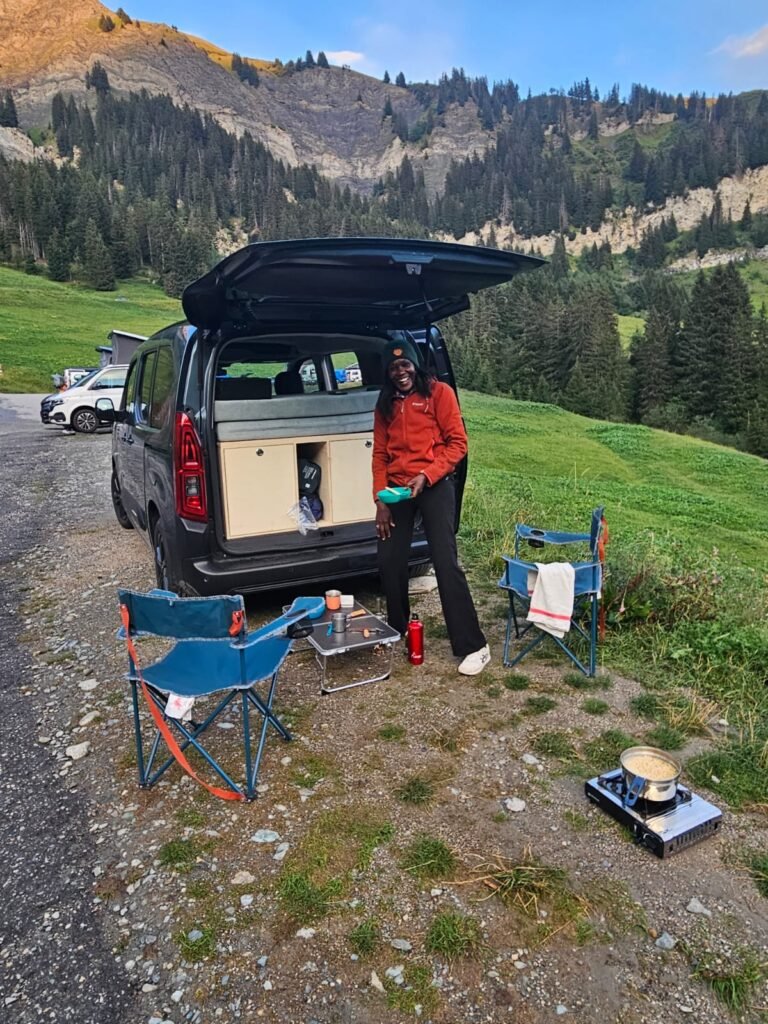
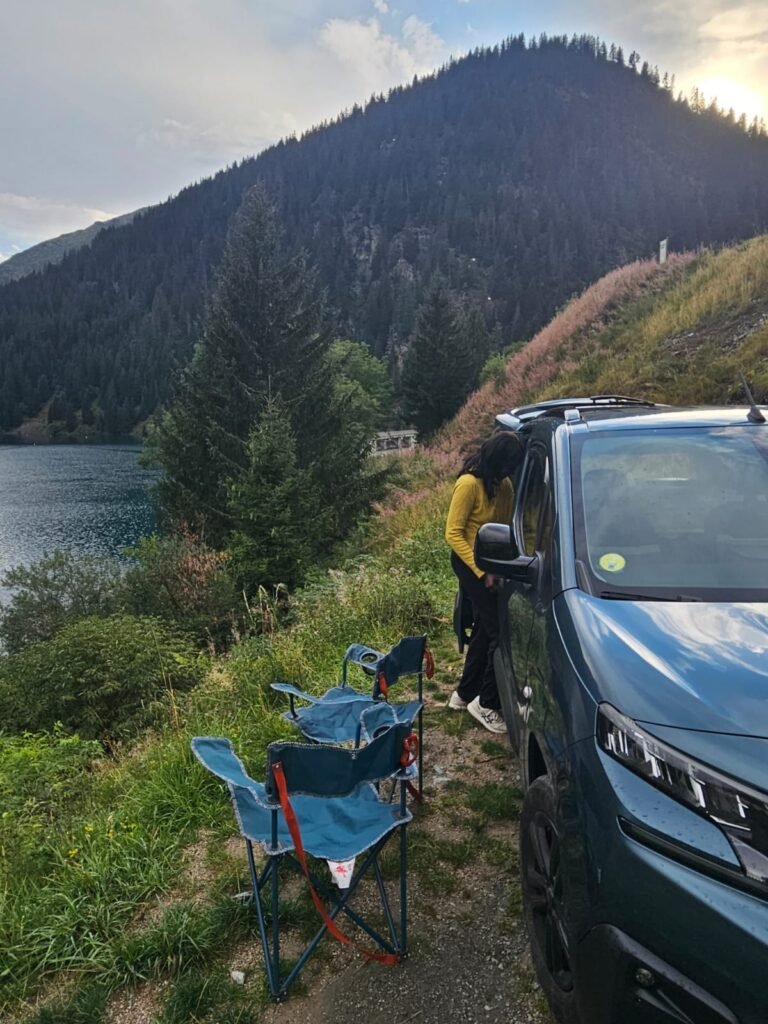
And there I was. Rain outside. Mountains around us. A lake metres away. And me, ridiculously happy because I was finally sleeping in a campervan. Sometimes dreams come true in surprisingly ordinary ways.
Saturday Morning: “But Where Are You Really From?”
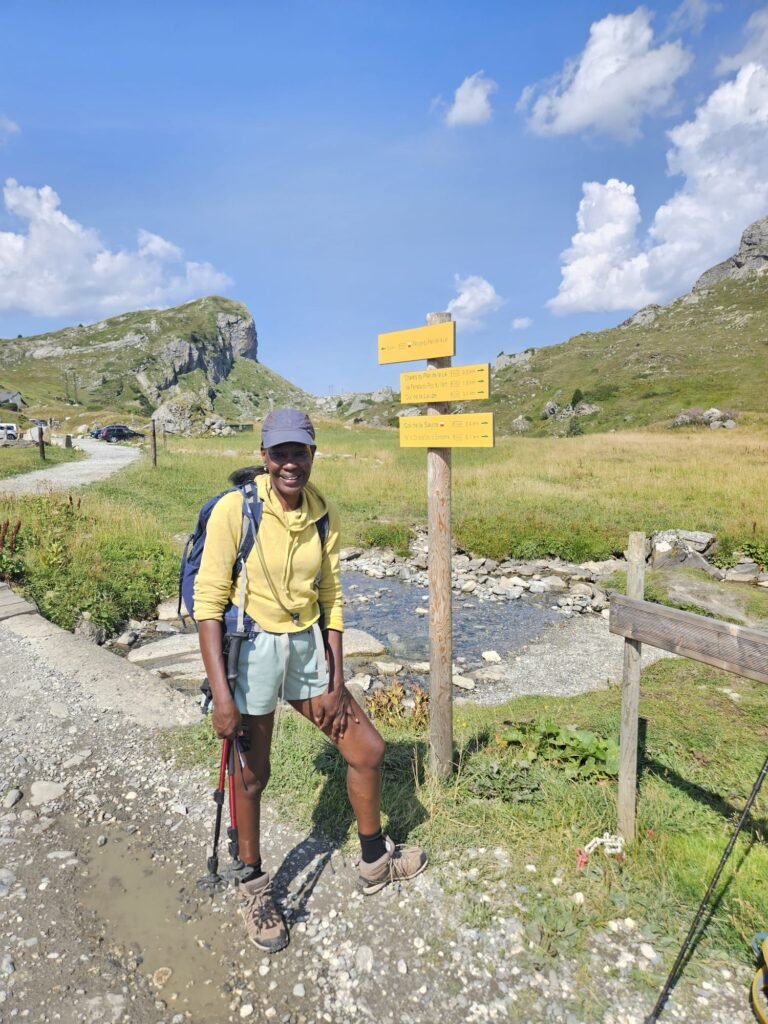
The following morning brought one of those encounters that stays with you precisely because it was so simple. We were preparing breakfast beside the van when an older couple, already out walking, stopped to say hello. I have noticed that this happens to me quite often in the mountains. Perhaps people are simply curious. Perhaps there is sometimes an unspoken question about what a Black African woman is doing high in the French Alps. I don’t always know.
The woman eventually asked where I was from. “Chambéry,” I replied. Technically correct. Apparently not the answer she was looking for. She tried again. No, she wanted to know where I was really from. I laughed and said “Kenya.” “Aaaah!” she responded, looking rather pleased with herself. She had known, she said, that I wasn’t from here.
Her husband immediately teased her and told her to stop interrogating me. There was no hostility in the exchange. Quite the opposite. We all laughed, they continued on their hike, and for the rest of the weekend my friends and I had a new joke. Apparently, Chambéry was no longer an acceptable answer to the question of where I come from. Living in the diaspora means becoming accustomed to that question. Sometimes it irritates me. Sometimes it opens conversations. And occasionally, on a cold morning beside an Alpine lake, it simply becomes funny.
Roc du Vent and a Window onto Mont Blanc
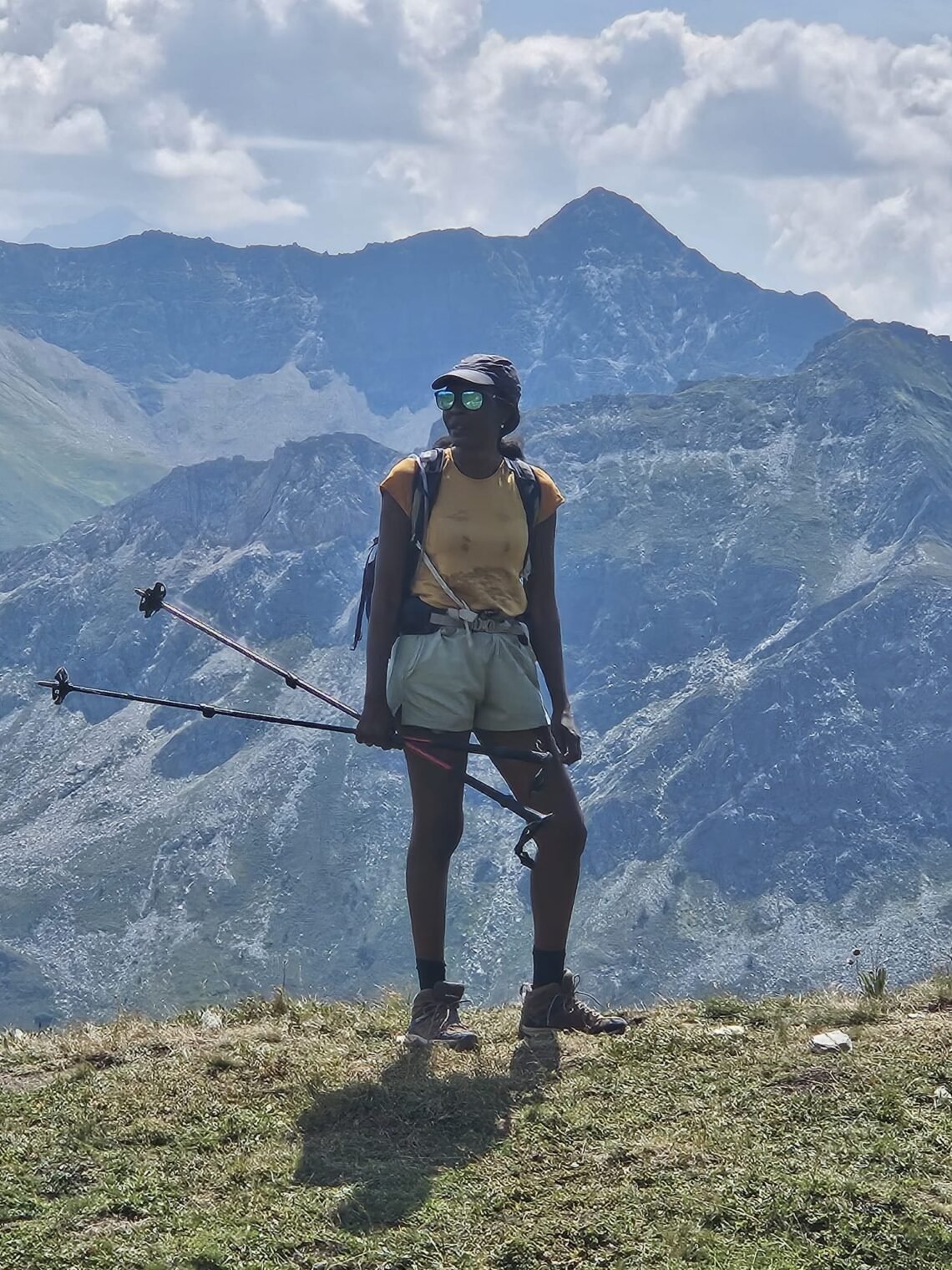
After breakfast, it was time for the serious walking. We headed towards Roc du Vent, one of the great natural viewpoints of the Beaufortain. This became the big hike of our weekend, climbing through the high Beaufortain landscape and reaching an altitude of around 2,330 metres on our recorded route.
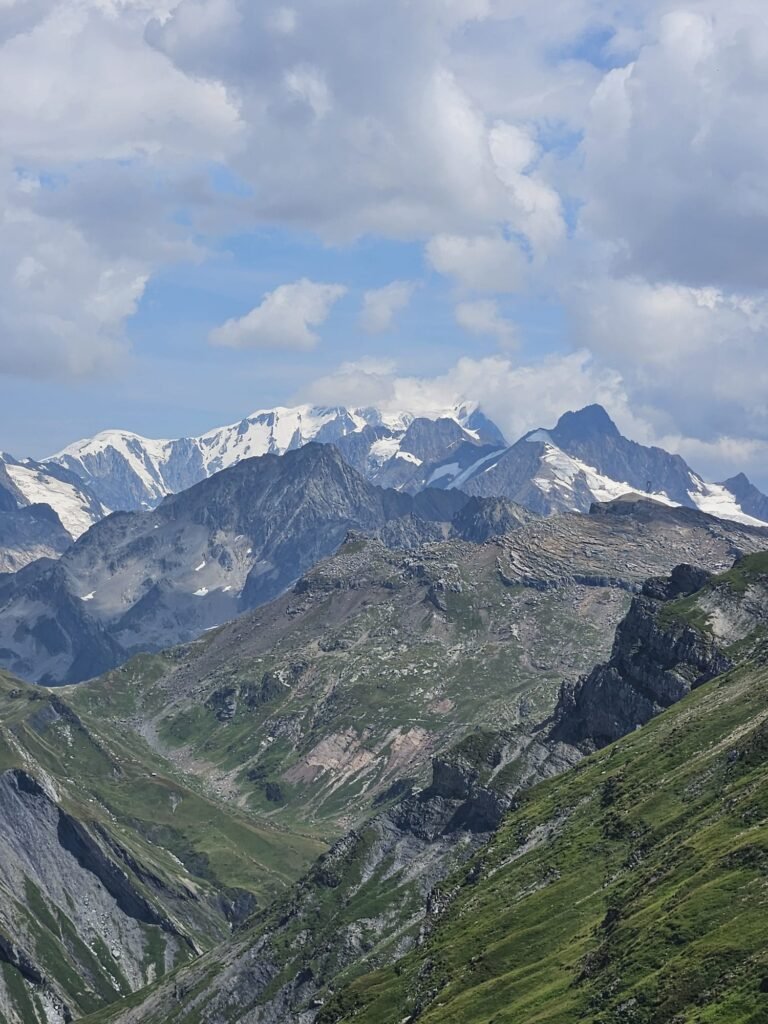
And those kilometres delivered. Roc du Vent itself rises to approximately 2,360 metres and occupies an extraordinary position above the Roselend landscape. From the high trails, the Beaufortain opens around you: reservoirs far below, green ridges folding into one another and, dominating the horizon, the unmistakable white mass of Mont Blanc. Seeing Mont Blanc from here puts the Beaufortain into geographical perspective.
You are standing in a massif with its own distinctive identity while looking towards the highest mountain in the Alps. The contrast is beautiful: the glaciated world of Mont Blanc in the distance and, closer to you, the green pastures, limestone formations and sculpted ridges of the Beaufortain. And then there is La Pierra Menta.
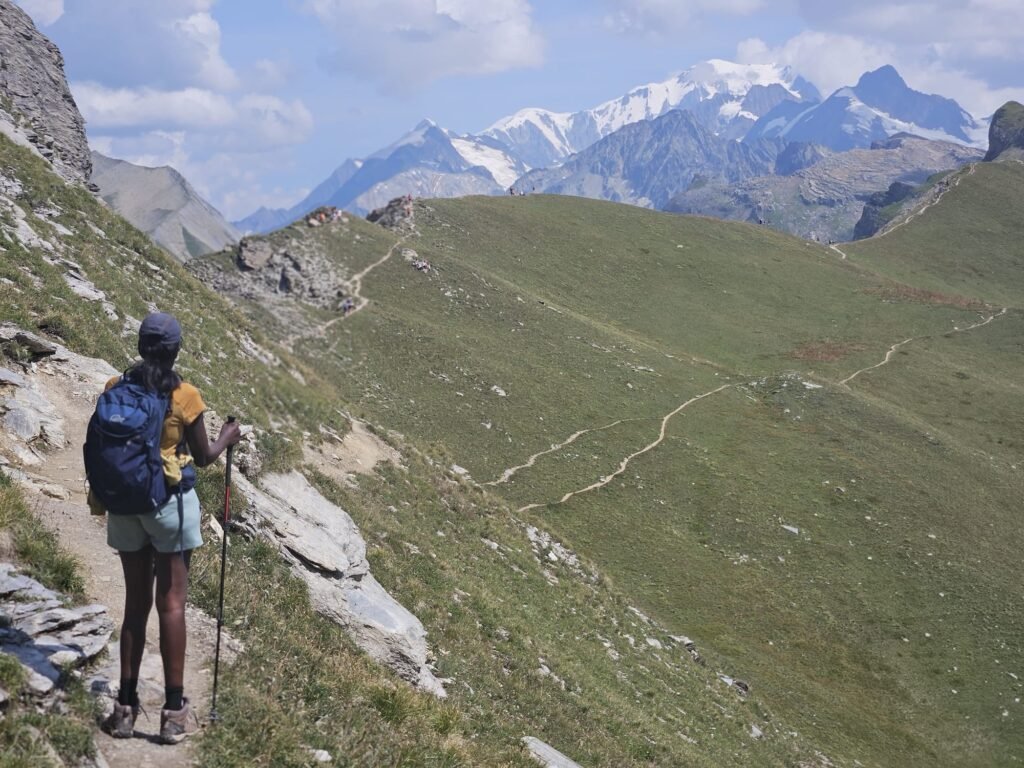
At around 2,714 metres, this extraordinary rocky monolith is one of the great symbols of the Beaufortain. Its silhouette is unmistakable—a huge slab of rock seemingly planted vertically into the mountains. The name is also known far beyond the valley because of the legendary Pierra Menta ski-mountaineering race, one of the major events of the international ski-mountaineering calendar. From our trail, however, there were no racing skis. Just boots, poles, enormous views and plenty of time.
The tunnel/ cave We Almost Entered Unprepared
Our loop around Roc du Vent also contained a small adventure we hadn’t quite planned for. The route passes through a mountain tunnel—a passage that took us roughly fifteen minutes on foot. What we had somehow failed to register was one fairly important detail:bring a light. We entered. Darkness. Proper darkness. The sort where you suddenly realise that mountains don’t care whether you read the instructions. Then came the obvious modern solution: our phones.
There was just one problem. The battery was already running dangerously low. So there we were, making our way through a pitch-black mountain tunnel by phone light while simultaneously trying not to use too much phone light. Not exactly textbook hiking preparation. But definitely memorable. And for anyone considering this route: bring a headlamp. You can thank me later.
A Night at Camping Domelin
By evening, after a full day in the mountains, we made our way back towards Beaufort and pitched our tent at Camping Domelin. After the previous night’s campervan luxury, we were finally going to use the tent we had carried with us. Domelin makes a practical base for exploring the area because it sits close to Beaufort itself while still feeling surrounded by mountains. After a long day walking, there is something deeply satisfying about the simplicity of a campsite: tent up, warm shower, shoes off, food, deep conversation and sleep. Nothing complicated.
Sunday: When a Road Diversion Changes the Plan
Sunday was supposed to be straightforward. The plan was to head towards Col du Pré. But mountain weekends have taught me that sometimes the best thing you can do with a plan is abandon it. A road diversion sent us in another direction. Somewhere along the way, we found ourselves passing through Les Saisies, where a market was underway. Instead of insisting on our original itinerary, we decided to be spontaneous and continued towards Hauteluce. It turned out to be exactly the right decision.
Hauteluce: Another Side of the Beaufortain
If Roc du Vent had shown us the dramatic side of the Beaufortain, Hauteluce revealed something softer. The landscape here feels lived in. Beautiful wooden chalets sit among green slopes. Farms and pastures remain part of everyday life. Roads curve between tiny settlements with mountains constantly appearing between buildings. After the previous day’s long mountain outing, this was a gentler way to finish the weekend. Our hike covered approximately 7.6 kilometres, giving us time to walk without rushing and to take in this very different side of the Beaufortain.
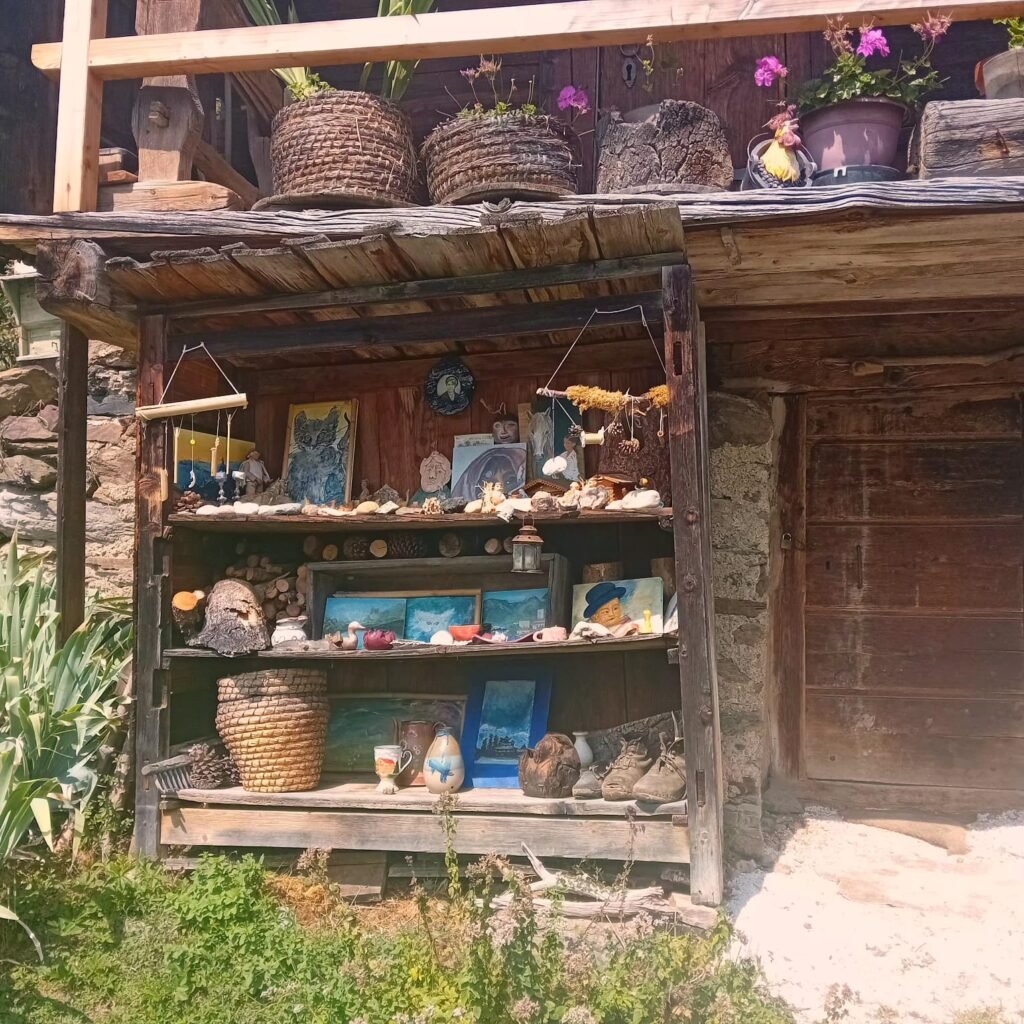
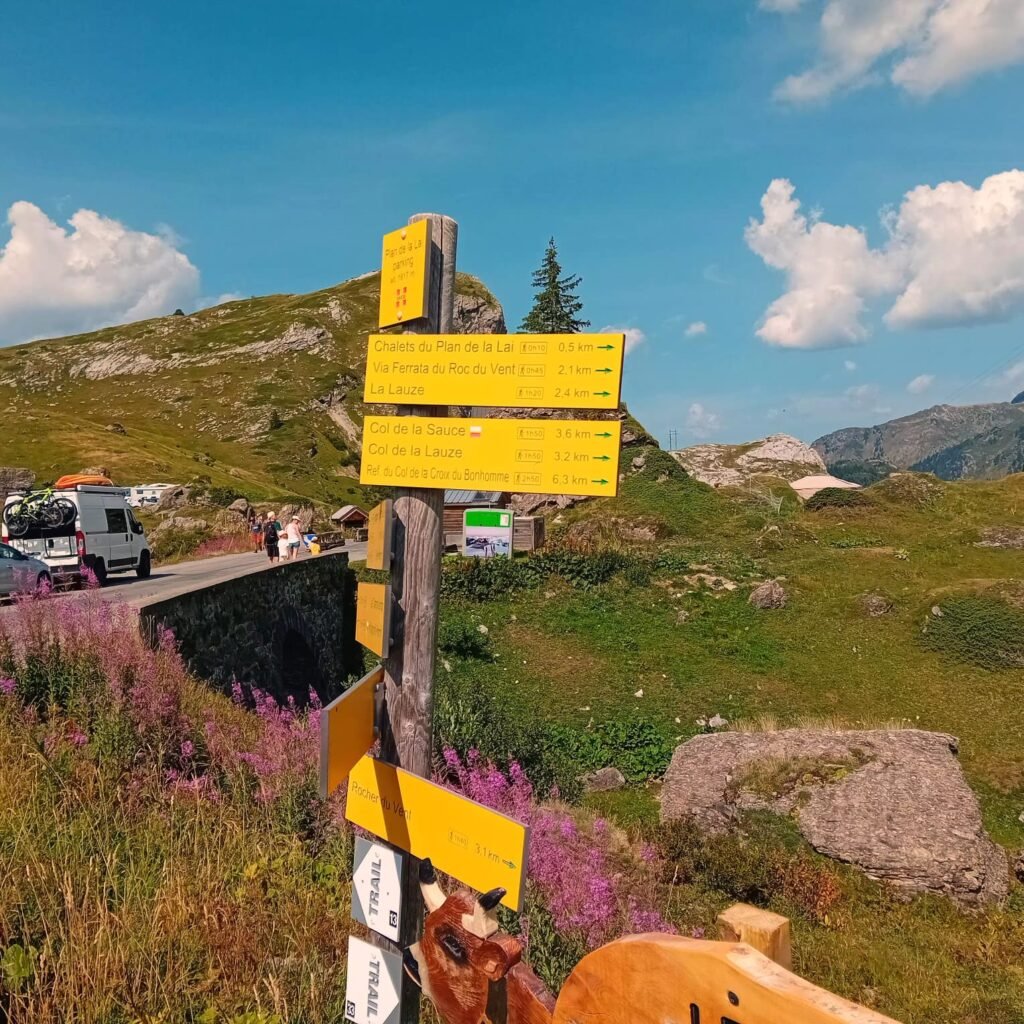
There was no need to chase kilometres that day. Sometimes hiking is about distance. Sometimes it is simply about being somewhere beautiful.
You Cannot Leave Beaufort Without Beaufort cheese
There was, however, one final obligation. We could hardly spend three days in the Beaufortain and leave without Beaufort cheese. The relationship between this cheese and these mountains goes far beyond sharing a name. Beaufort has held AOP (Protected Designation of Origin) status since 1968, and its production remains closely tied to the landscape and traditional Alpine farming. It is produced from the milk of Tarine and Abondance cows, whose grazing helps maintain the mountain pastures we had been walking through all weekend.
The most special version, Beaufort Chalet d’Alpage, is produced during the summer months from the milk of a single herd grazing above 1,500 metres and is made immediately after milking. Suddenly, all those cows we had passed on the trails were no longer simply part of the scenery. They were part of the story. So before leaving, we stopped at the cooperative and bought some Beaufort to take home.
After three days of lakes, rain, campervan sleeping, more kilometres of walking, mountain passes, tunnels, Mont Blanc views, unexpected deep conversations, spontaneous diversions and far too much laughter, there wasn’t much left to do except sit quietly and take it all in. It had been a super weekend.
Why I Would Return
One of the unexpected pleasures of the Beaufortain in summer is the temperature. While much of France can be sweltering in July and August, altitude changes everything. Even sunny hiking days can be pleasantly cool, and mornings and evenings can become genuinely cold—as our abandoned first-night camping plan quickly demonstrated. For someone looking to escape the summer heat, the Beaufortain can feel like another world.
But now I am curious about the opposite season. I want to see these same green slopes covered in snow; to return to Hauteluce when the chalets are surrounded by white instead of summer pasture. And I would love to put on snowshoes and discover what these mountains sound like in winter.
If You Want to Explore the Beaufortain
Give yourself at least three days some people take longer depending on the routes, it is also possible.
Start with Lac de Saint-Guérin. At 1,557 m, it is accessible and an excellent introduction to the landscape.
Put Roc du Vent on your hiking list if you are comfortable in mountain terrain. Your distance will depend on the route you choose. The views towards Mont Blanc, Roselend and the surrounding peaks are exceptional.
Bring a headlamp. I repeat: bring a headlamp. Your phone deserves better than being asked to rescue you from a dark mountain tunnel on 10 percent battery.
Don’t underestimate Alpine weather. Even in August, temperatures can drop quickly. Carry waterproof clothing and warm layers regardless of what the valley forecast says.
Spend time in Hauteluce and Les Saisies. They offer a different experience from the high mountain trails and are worth exploring slowly. This is where i would be planning next.
Visit the Beaufort cooperative.
Leave room for spontaneity. Road diversions, village markets and unexpected stops may end up becoming some of the best parts of your trip.

You May Also Like
Renting a House in France: Expectations vs Reality
Understanding the French School System as a parent in the diaspora.