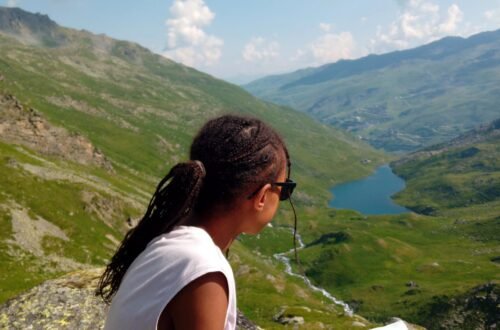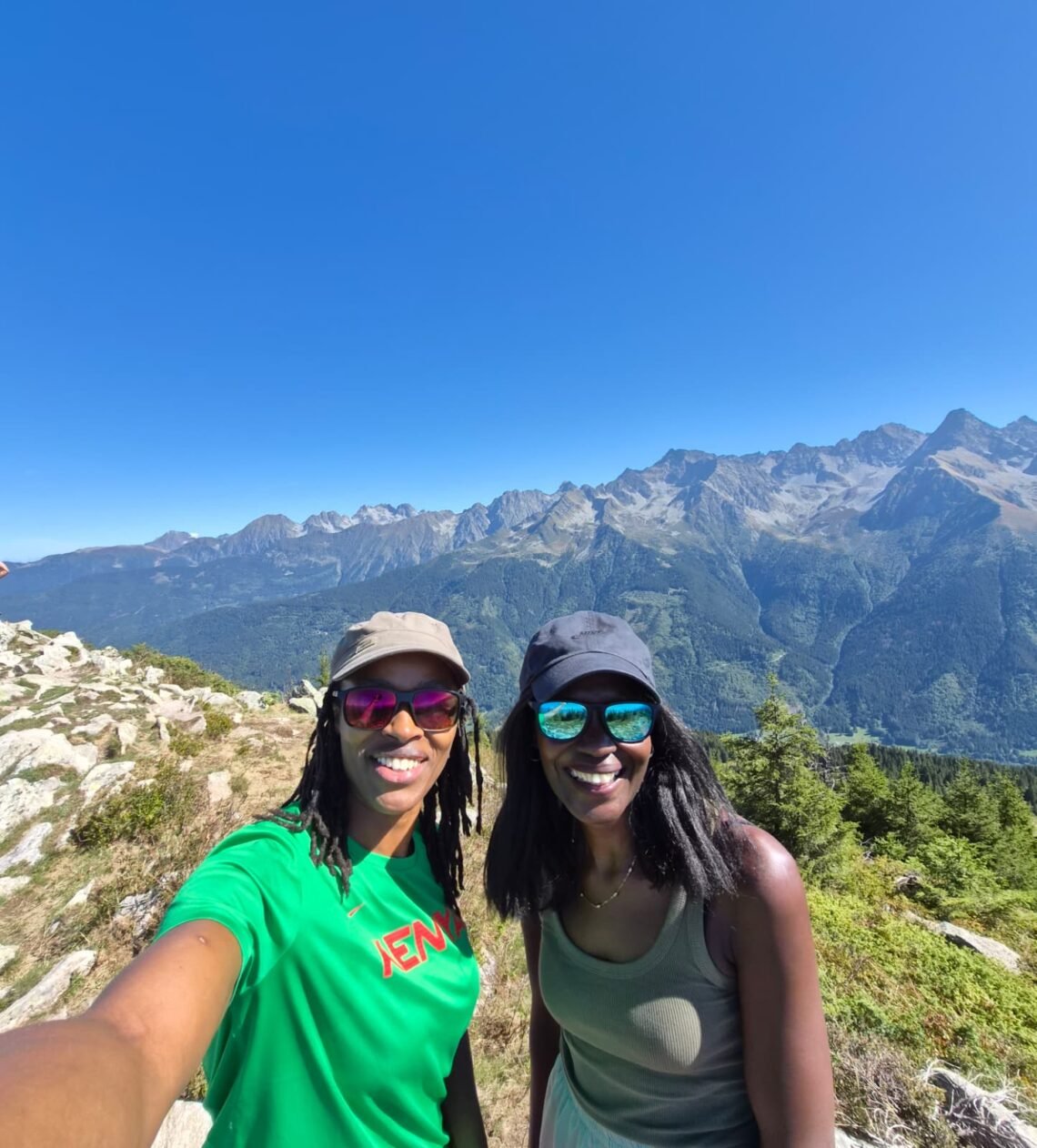
Two Kenyan Women — One, the Mother of a Winter Olympian at 1,926 Mtrs in the French Alps.
“A chance connection, a hike to Le Grand Rocher, and a conversation about motherhood, winter sport, identity and who gets to belong in the mountains.”
I knew immediately which one was Josephine.
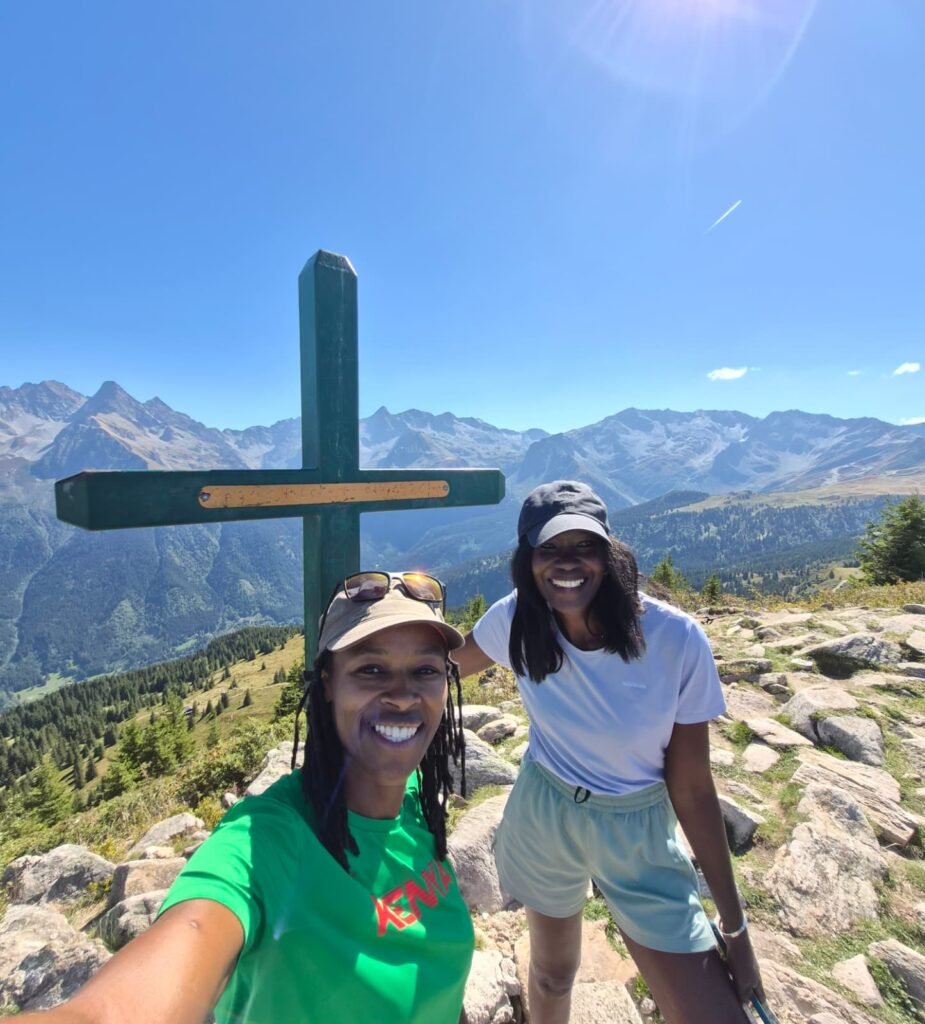
We had never met before, but as I arrived at our meeting point in Crolles that Saturday morning, there she was wearing a bright green T-shirt with KENYA written boldly across the front. I laughed to myself as i drove towards her. She had certainly made identification easy. Although, truthfully, I probably would have recognised her anyway.
When you spend enough time hiking in the French Alps as a Black African woman, you become accustomed to being one of very few Black people on the trails. Sometimes, I am the only one. So another Black woman showing up with the right outfit ready for the mountains was already going to catch my attention. What I didn’t know that morning was that, a few hours later, we would be standing together at 1,926 metres on Le Grand Rocher, talking about Kenya, France, motherhood, children, skiing, sport, migration, identity and the strange and wonderful ways our environment can reshape who we become. And perhaps, without intending to, we would also make a few people on the mountain look twice.
A friendship that started with a blog
Josephine and I met because she had read one of my hiking stories. She lives not too far from me and reached out after reading about my experiences in the mountains. We soon discovered a shared interest in hiking, and eventually the obvious question came up: instead of talking about the mountains, why didn’t we actually go into them together?
And so we did.The connection between us came quickly. Of course there was the immediate excitement of meeting another Kenyan woman in this corner of France. Anyone who has lived away from home will probably understand that feeling. You hear the familiar accent, laugh at something that requires no explanation, and suddenly home feels a little closer. But there was something more. We both loved the mountains. We both ski for her and snow- shoeing for me.We were both mothers raising sporty children in France. Neither of us had grown up anywhere remotely resembling the French Alps. Somehow, our lives had brought us here.
From Kenya to France and Sports
As we drove and later walked, we talked a lot about our children. Josephine’s children are incredibly sporty, with mountain biking playing a big part in their lives. As a mother, much of her time revolves around training, competitions and supporting their sporting activities. I recognised some of that world. My own children are sporty too. Football is the competitive sport in our household, while basketball, tennis and padel are more for leisure.
But one part of Josephine’s story was particularly interesting. One of her children had reached the level of qualifying for the Winter Olympics in Milano Italy last year. That became one of the highlights of our conversation.
Think about Kenya and sport, and certain images immediately come to mind. Running. Marathons. Athletes from the Rift Valley seemingly flying across finish lines around the world. Winter sport? Probably not. Yet here was a Kenyan mother living in the Alps whose child had reached an extraordinary level in a winter discipline.
It led us into a much bigger conversation about opportunity and exposure. What if talent isn’t necessarily limited by where we come from, but sometimes by what we are exposed to? Neither Josephine nor I grew up skiing. Neither of us grew up surrounded by Alpine peaks. Yet today, the mountains are part of our lives, and our children are growing up with opportunities and sporting environments very different from those we knew. Perhaps that is one of the beautiful things about raising children between cultures. They inherit something from where we came from, while discovering possibilities offered by where they are growing up.
Kenyans can run. The world already knows that story. But Kenyans can ski, ride, climb the highest mountain peaks and compete on snow too.
So, where exactly were we going?
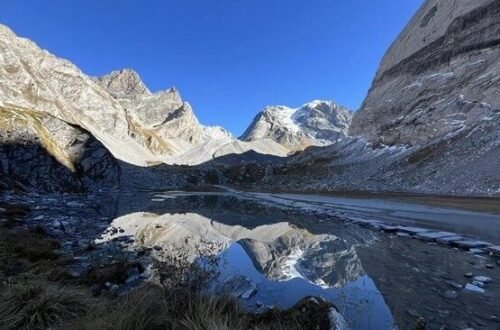
Our destination was Le Grand Rocher, a 1,926-metre summit in the Belledonne mountain range in Isère. Belledonne rises along the eastern side of the Grésivaudan valley, between the wider Grenoble and Chambéry areas. Grand Rocher sits on the western side of the massif, around the Crêts-en-Belledonne, Theys and Sept Laux area. One of the things that makes this hike special is that Grand Rocher doesn’t simply appear at the end. The landscape introduces itself gradually.
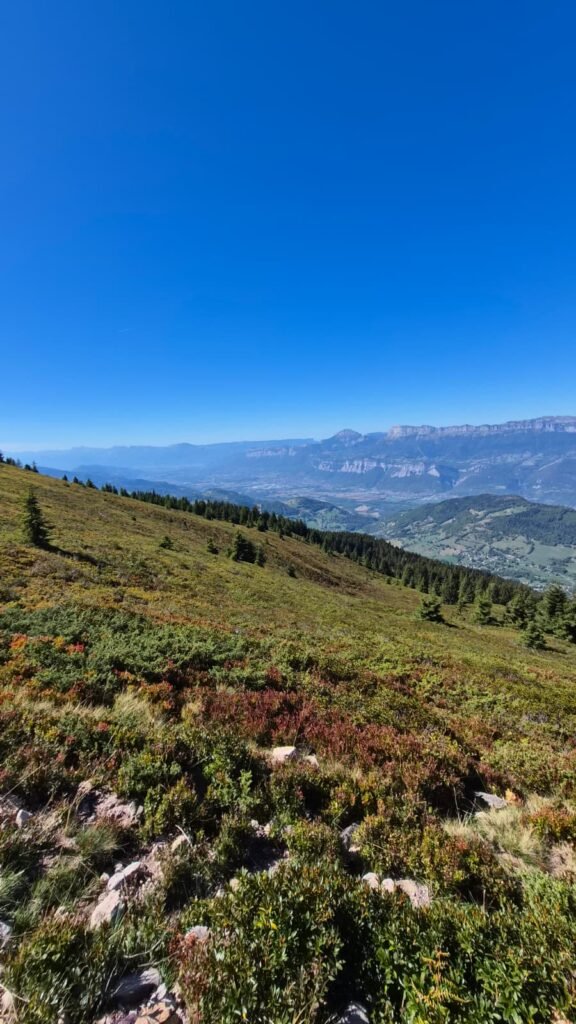
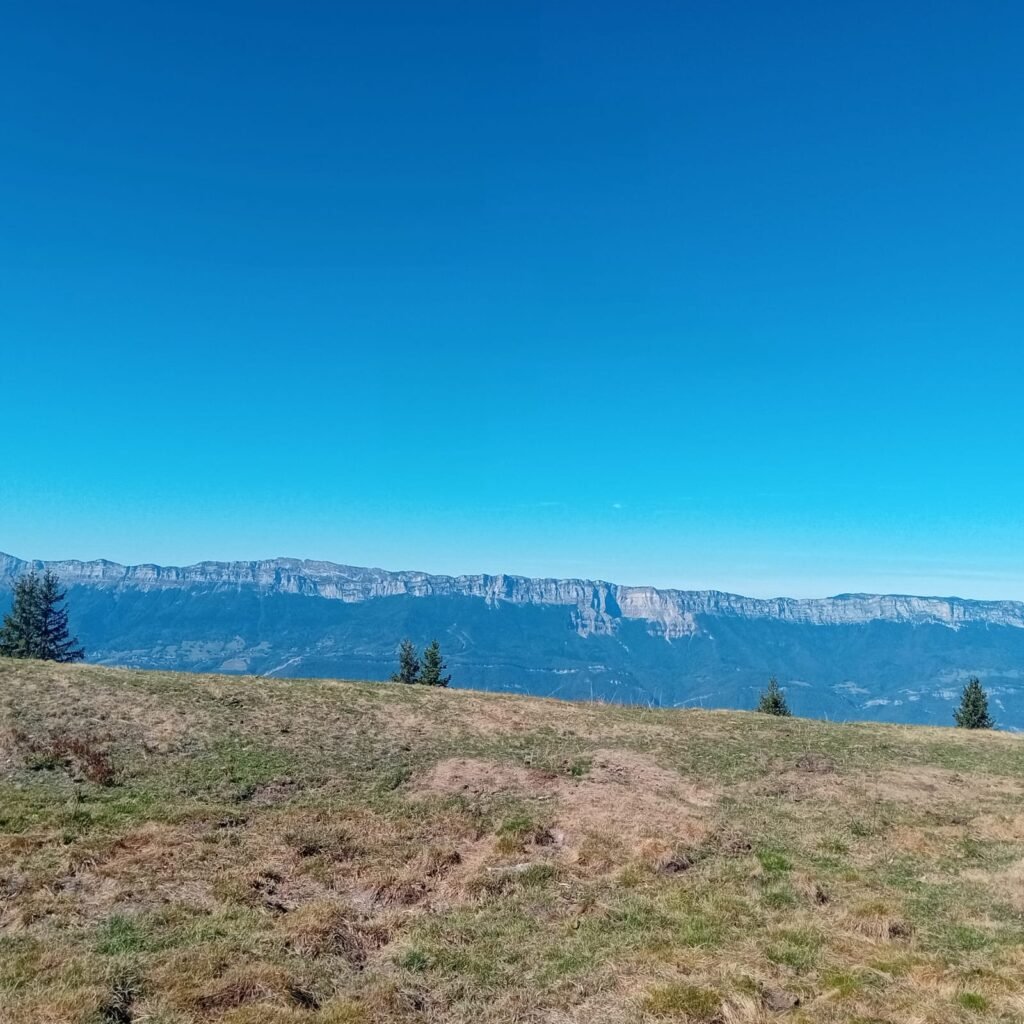
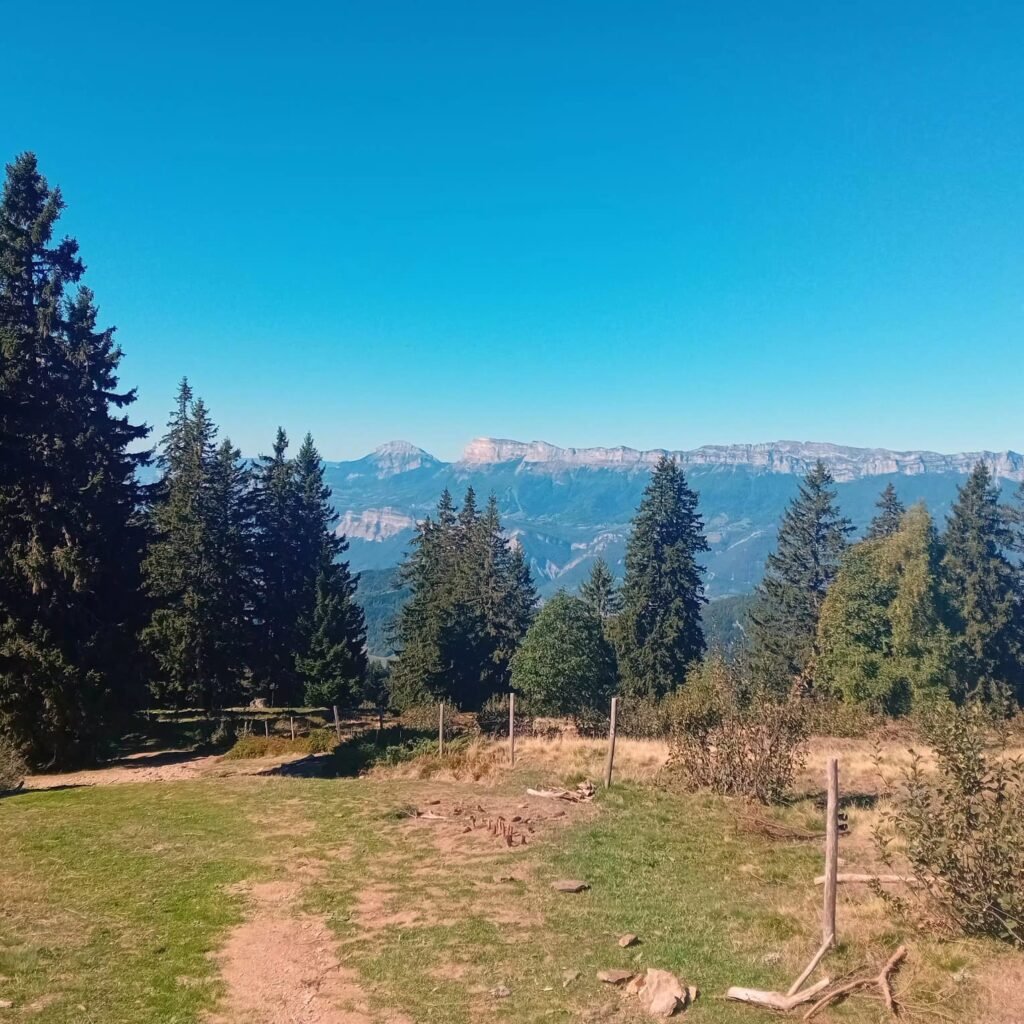
Our route would take us through the forest towards the Refuge du Crêt du Poulet, sitting at around 1,700 metres, before continuing into more open alpine terrain and eventually along the ridge towards Grand Rocher. From higher up, the geography of this part of the Alps begins to unfold around you: Belledonne’s sharper peaks, with views stretching towards other massifs including Chartreuse, the Bauges and Vercors. At least, that was the plan. First, we actually had to find the trail.
Where are those yellow markings?
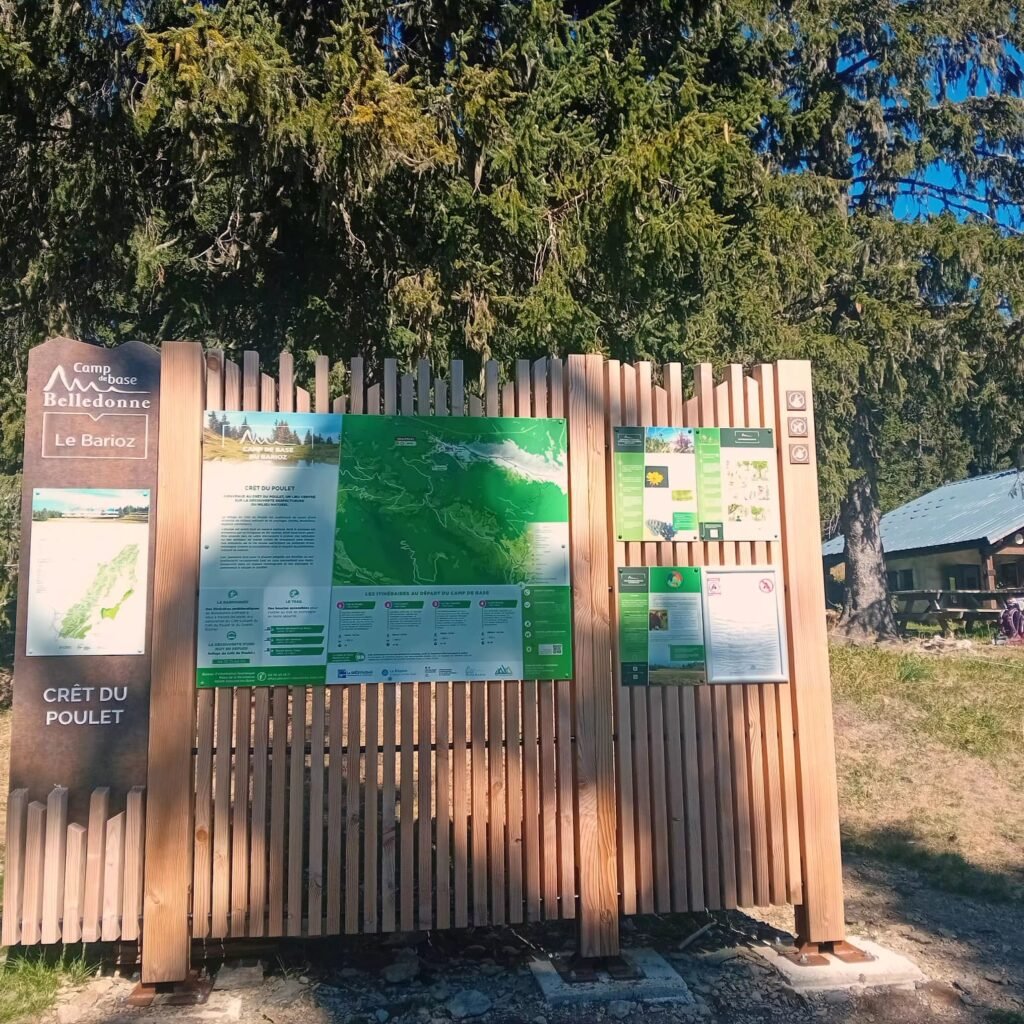
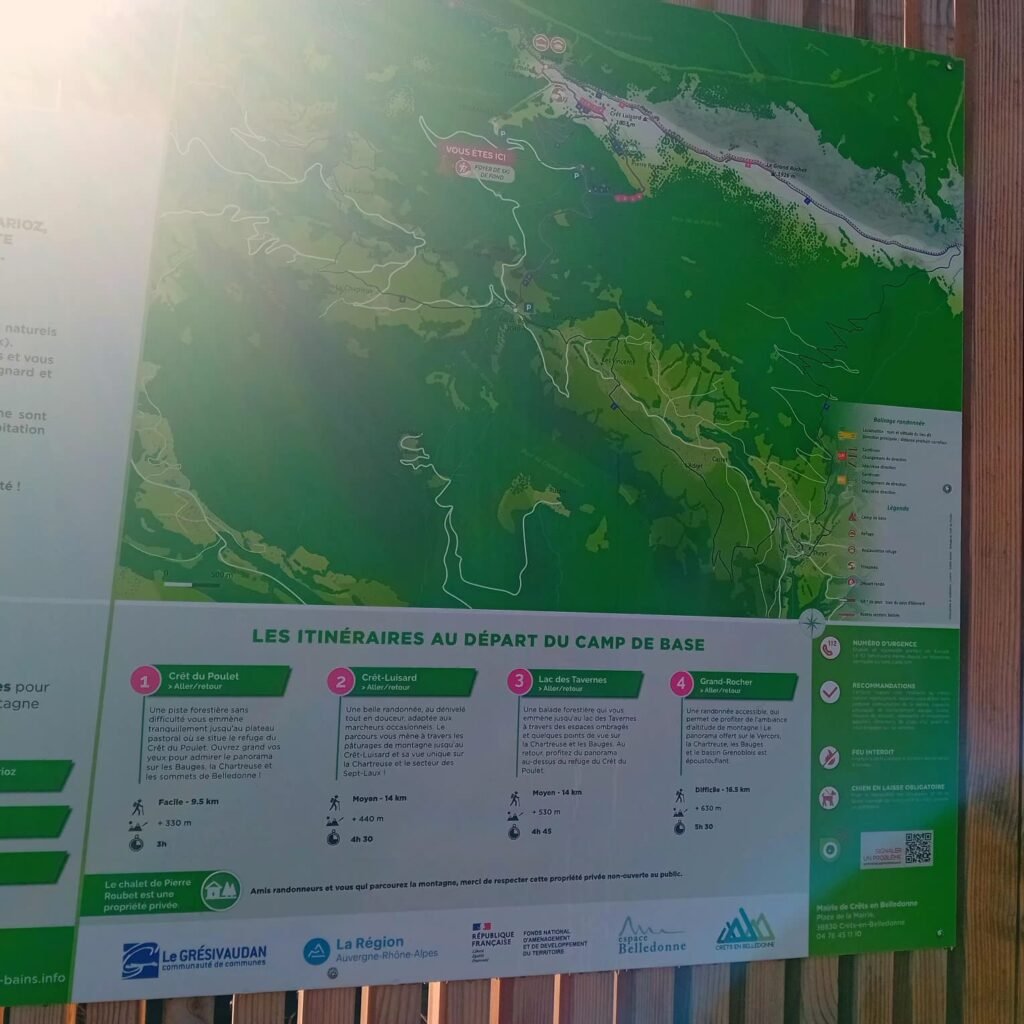
Our hike didn’t begin quite as confidently as this story might suggest. We knew where we wanted to go. Finding the famous yellow hiking markings was another matter.We looked and looked again. Eventually, we started using the numbered ski signs one, two, three, four—to orient ourselves. To our surprise, the first part had us walking along a broad dirt road that seemed wide enough for vehicles. I remember thinking: Is this really it? It certainly didn’t feel like the little mountain trail I had imagined. But sometimes a hike takes a while to reveal itself.
Eventually, we diverted from the broad track.The path narrowed. The forest closed around us.And there it was.The real hike had begun.
Towards the Refuge du Crêt du Poulet
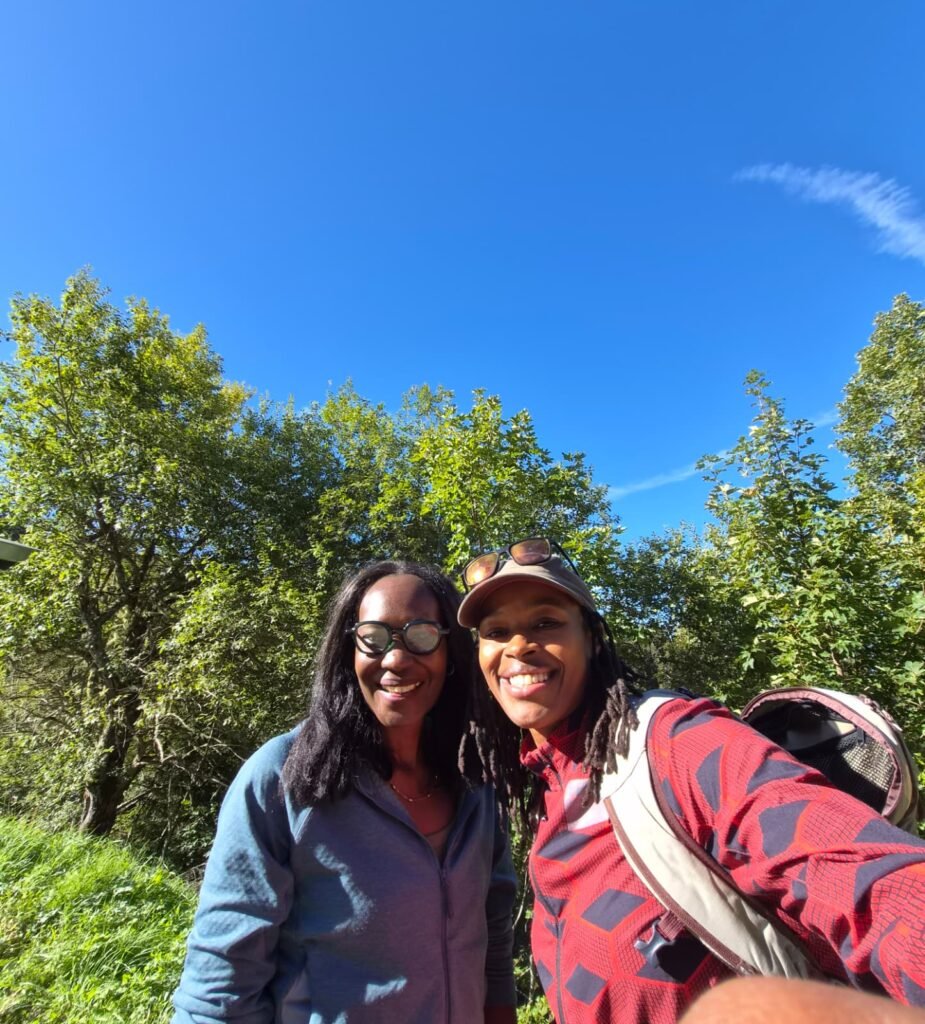
We started climbing towards the Refuge du Crêt du Poulet. The beauty of this route is how gradually the landscape changes.
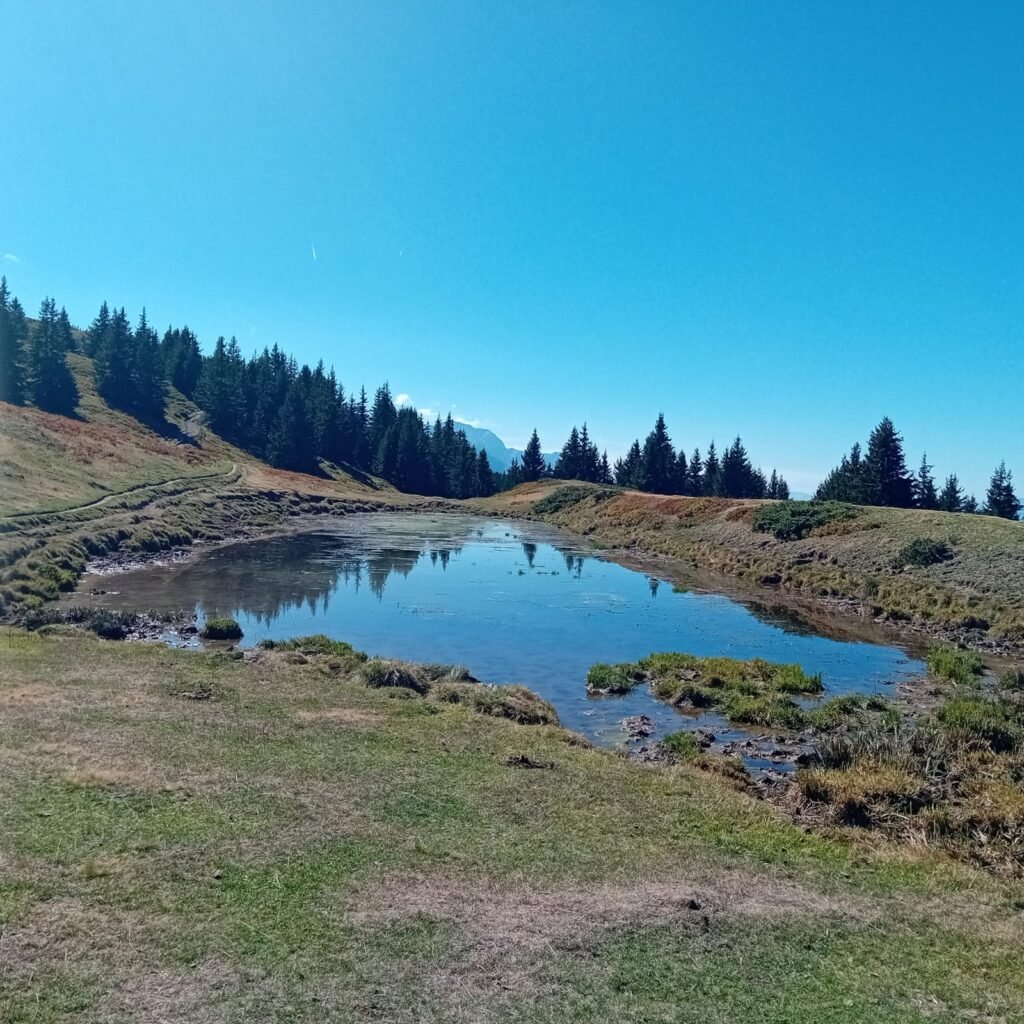
At first, the forest dominates. Your attention is on the path, your breathing and the conversation happening beside you. Then the trees begin to thin. Light starts coming through. And suddenly the landscape opens. The mountains are everywhere. On this day, we had been given one of those almost ridiculously beautiful Alpine days: deep blue sky, excellent visibility and mountains stretching across the horizon. We passed alpine meadows and wetlands where still water reflected the sky. The landscape became softer and more open before rising again towards the ridge.
And all the while, Josephine and I talked.That is one of my favourite things about hiking with someone. Conversation in the mountains is different. You don’t sit opposite each other wondering what to say next. You walk.Someone stops for water.You climb again.You notice something in the distance.One conversation ends.Another begins.Silence is allowed too. With Josephine, everything felt remarkably easy. She is very down-to-earth, and after a while, I almost forgot that we had only met that morning. It felt as though I had known her much longer.
How does our environment shape us?
Somewhere along that ridge, our conversation turned towards ourselves. Neither of us had grown up in the mountains. Yet here we were discussing ski seasons, hiking routes, mountain biking, road biking and which summits we might tackle next. How does that happen?We talked about how much our environment shapes us. Sometimes we think our interests are simply part of who we are. But perhaps some interests are simply waiting for the right environment to awaken them.You discover that being physically tired after climbing a mountain can somehow leave your mind feeling lighter.So you return.
Eventually, something that once seemed completely foreign becomes part of your life. That led naturally to another question. Where are the rest of us?
Why don’t more Black people venture into the mountains?
We couldn’t help noticing it.We rarely encountered people who looked like us. Why?There isn’t one simple answer. There can be practical barriers. Transport. Equipment. Cost. Knowing where to go. Understanding trail markings. Confidence about the weather and terrain. Having someone experienced enough to say: This route is fine. Come with me.
But perhaps there is another barrier that is harder to describe. The feeling that a space isn’t really meant for you. If you rarely see Black people hiking, skiing, mountain biking, road biking or staying in mountain refuges, it becomes easy to unconsciously categorise those activities as things other people do. Sometimes what changes that perception is remarkably simple. Seeing someone like yourself doing it. Someone who didn’t grow up in the mountains either. Someone who also had to learn. Someone saying: Come. I’ll show you.
Then we reached Grand Rocher
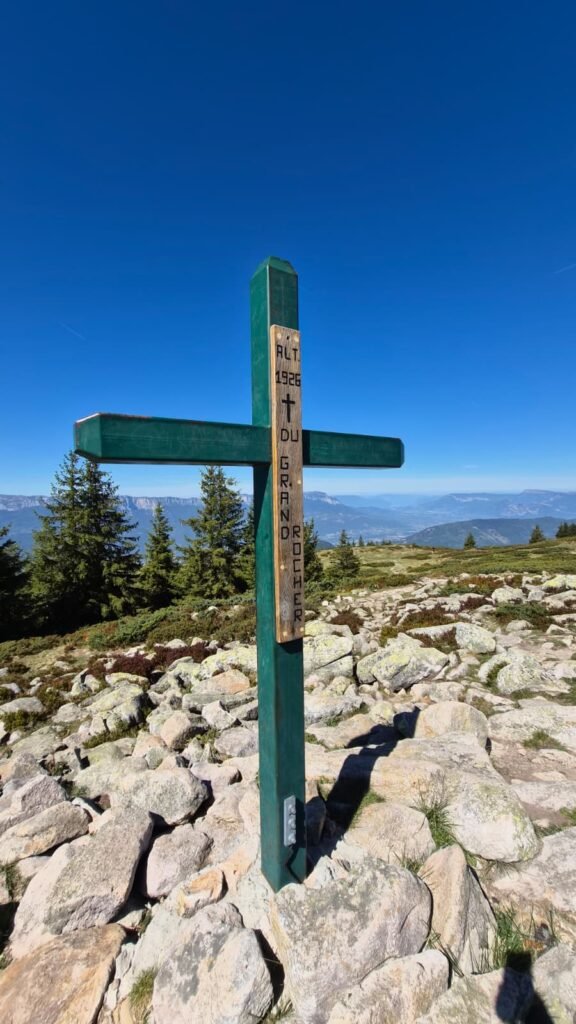
The simple summit marker: ALT. 1926 DU GRAND ROCHER; We had made it. Our objective for the day was achieved.
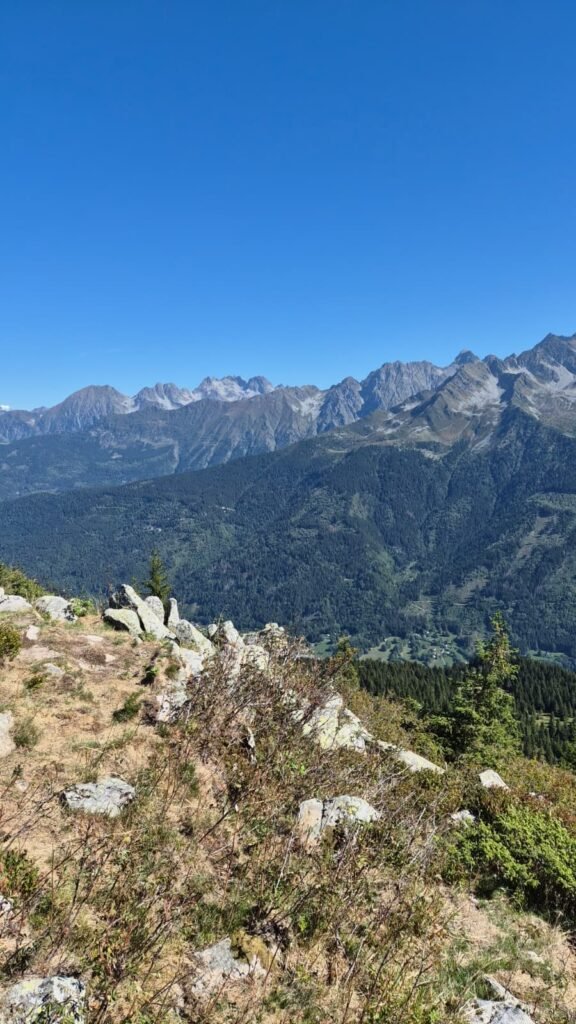
There is something deeply satisfying about arriving at a summit. For hours, you have been moving towards a point on a map, and suddenly there is nowhere else you need to go.So you stop.You look back.You realise how far you have walked, Grand Rocher didn’t feel like an ending. From where we stood, we could see other ridges and summits continuing beyond us.There was clearly more to do.More trails. More mountains.More possibilities.We could have continued, but we didn’t need to. Those other summits weren’t going anywhere. Standing there with Josephine, looking towards them, I realised there was more that we could do together too. This didn’t feel like the last hike.
Two Black women walking down a French mountain
On the descent, something rather amusing started happening.We encountered more hikers and VTT riders. Some greeted us normally and continued on their way. Others smiled, there were those who looked at us for that tiny bit longer. Not in an unpleasant way.More like curiosity.Sometimes even visible perplexity. I started wondering what exactly they were trying to work out. Maybe it was Josephine’s bright green KENYA T-shirt. Perhaps seeing the word Kenya halfway up a French mountain wasn’t quite what they expected that afternoon. Or perhaps it was simply us. Two Black women moving confidently through the French mountains, comfortable with the trails and knowing where we were going. I found myself smiling.Because perhaps we disrupted someone’s mental picture that day.
Maybe they weren’t accustomed to seeing Kenyan women up there.Maybe Kenya brought to mind savannahs and distance runners rather than ski slopes and Alpine summits.Yet there we were.Not lost.Not tourists who had accidentally wandered onto a mountain trail.We knew these mountains.We hike them.We ski them.Our children play sport in them.They have slowly become part of our lives. Josephine, just to remove any remaining ambiguity, was walking around with KENYA written boldly across her chest.
There was something wonderfully unapologetic about that image.It also brought our earlier conversation full circle.
We had spent part of the day wondering why relatively few Black people venture into these spaces. Yet simply by being there, perhaps we were quietly challenging that absence.
Sometimes belonging begins by simply showing up
By the time we returned, I realised the day had become about much more than reaching Le Grand Rocher.Two Kenyan women who had never met before had started the morning in Crolles. By the end of it, we had spent hours talking about motherhood, Kenya, France.One of our children had reached a level in winter sport that few people would instinctively associate with a Kenyan family. Perhaps this is how our ideas about belonging slowly change. Not necessarily through grand declarations. Sometimes simply through visibility.
Someone sees you on a trail. Someone sees a photograph.Someone reads a story. And perhaps somewhere, another African woman living in France thinks:Wait. I could do that. That matters to me. It is partly why I keep writing these stories. Not because everyone needs to become a hiker, certainly not because everyone needs to climb Grand Rocher. But because I know what the mountains have given me. Space. Challenge. Perspective. Friendships. Love. Freedom and strangely enough, Belonging.
So, to the Kenyans, Africans and anyone else living in France who has looked up at these mountains and thought, I’d love to try that, but I wouldn’t know where to begin, come with us. You don’t have to have grown up hiking. You don’t have to come from the mountains. You don’t have to look like the people you usually see on the trails. Sometimes, you just need someone to take that first walk with.
There is room on the trail. I hope you will join us;


You May Also Like
Discovering the French Mountains as an African.
Understanding Immigration and Legal Pathways in France.