Three Kenyans, a Rainy Mountain Trail, and a France We Wish More People Knew….
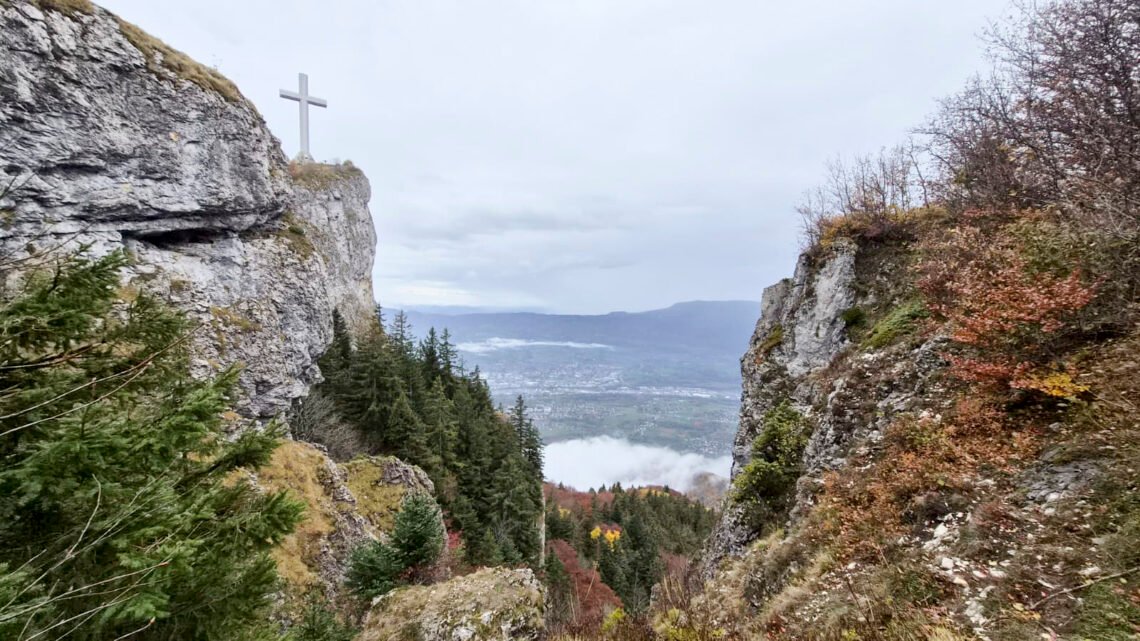
La Croix du Nivolet in Massif des Bauges, Savoie
“I almost did not come,” Maureen admitted.
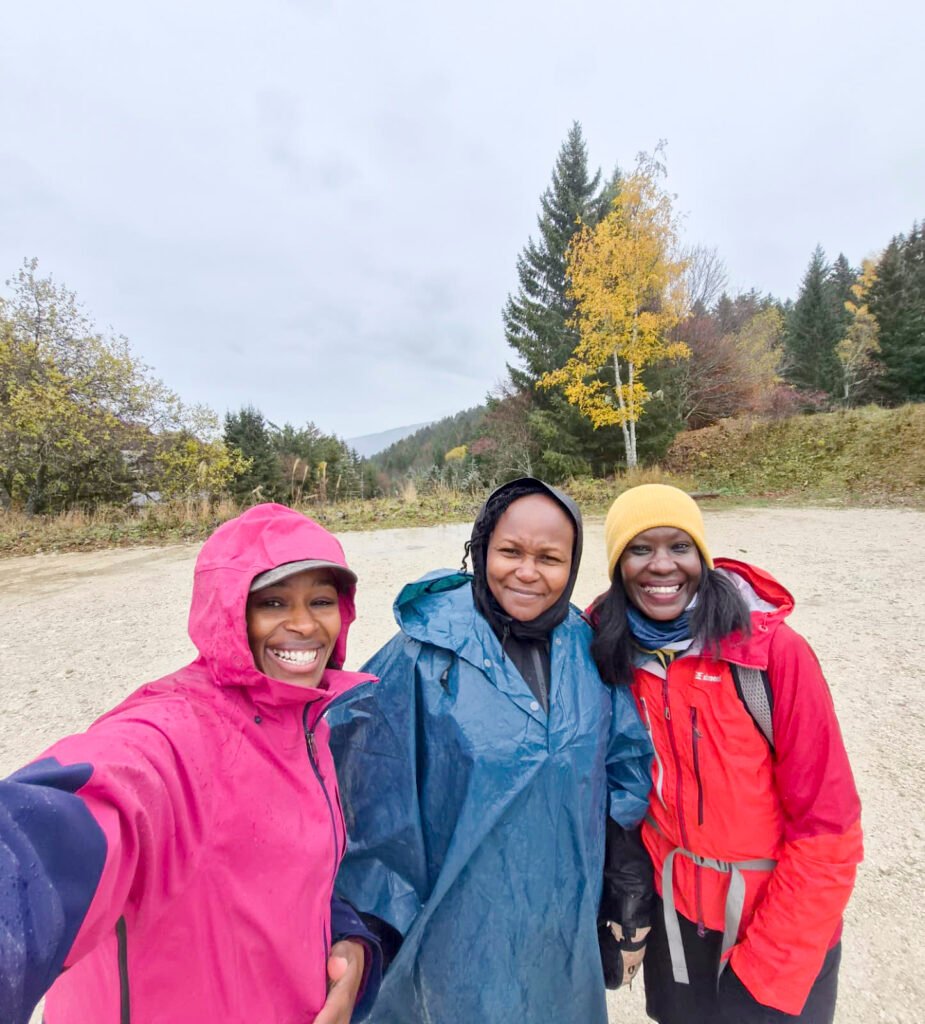
Looking at the rain pouring outside that morning, I could understand why. We had planned a hike to La Croix du Nivolet, one of the most recognisable landmarks overlooking Chambéry in the French Alps, but the weather was hardly encouraging. Maureen, who was visiting from Kenya, had considered staying behind. Out of respect for her host ( who was a friend of mine and had asked that we hike together), decided to join us. So there we were, three Kenyan women -Josephine, Maureen and myself — setting off into the mountains on a cold, wet November morning.
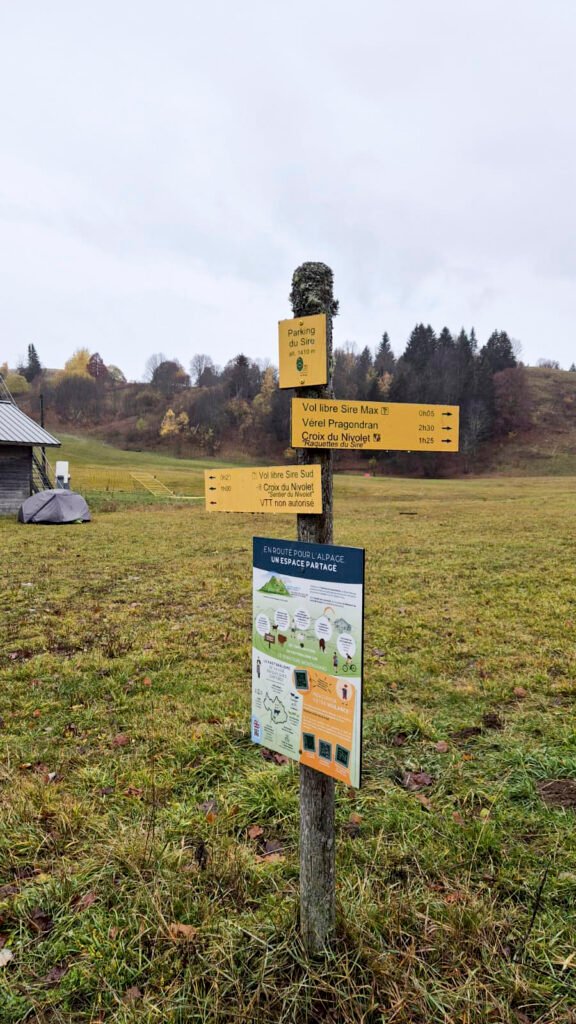
We were all well layered, and Maureen had certainly come prepared with the right clothing. Still, autumn in France can be a surprise if you are not accustomed to it. The colourful leaves and beautiful landscapes that look so inviting in photographs come with falling temperatures, damp air and sometimes relentless rain. As we started climbing from Parking du Sire, at approximately 1,410 metres,the layers we had carefully put on began coming off, one after another. The climb was warming us up, our conversation was flowing, and the rain gradually became part of the experience rather than something to complain about.
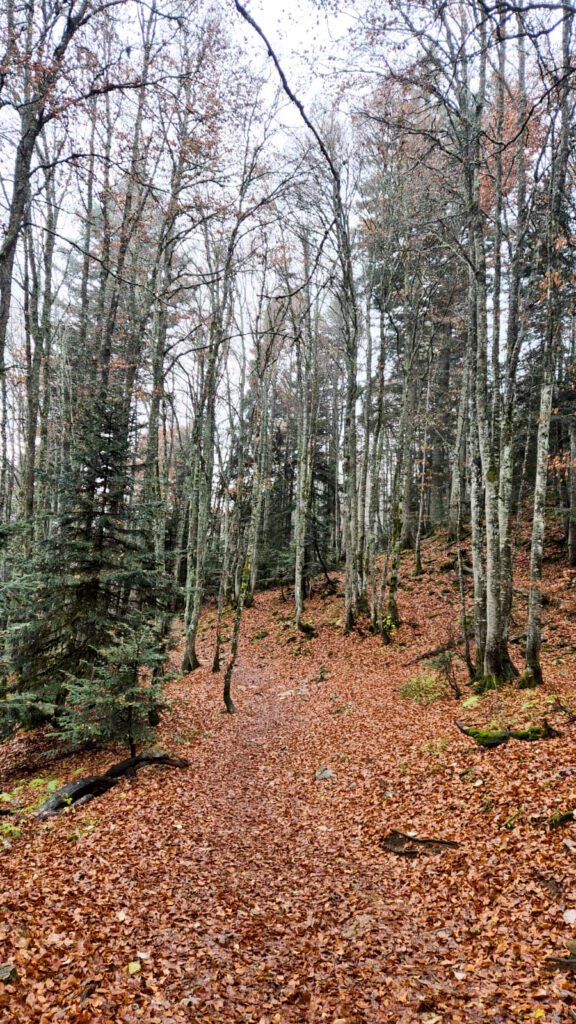
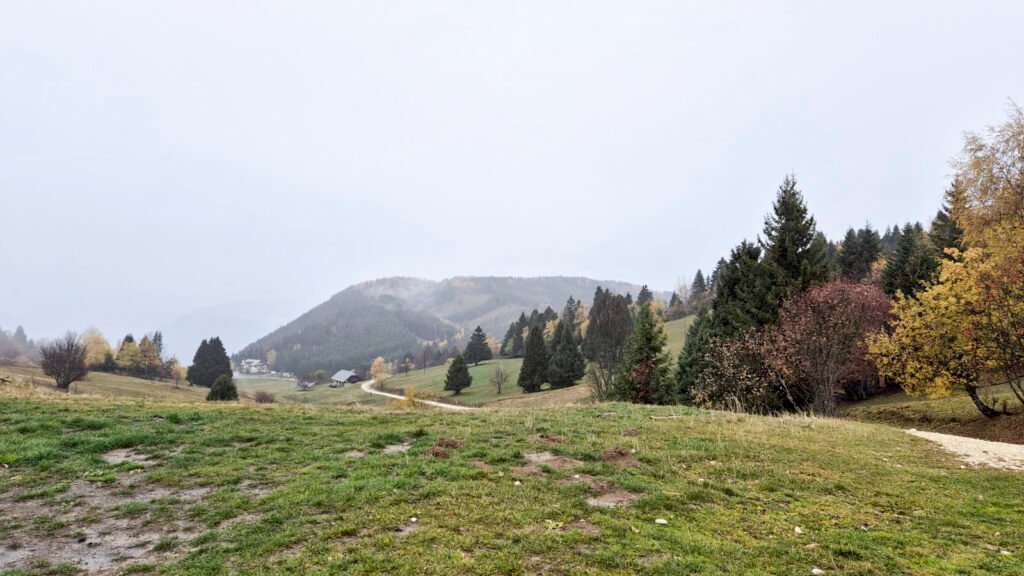
The trail wound through the autumn forest, with fallen leaves carpeting the muddy ground and the trees displaying the last shades of gold, copper and brown. Clouds drifted across the mountains, occasionally revealing glimpses of the valley below. It was not the clear, sunny Alpine day that visitors often imagine, but there was a quiet beauty to it. We stopped occasionally to take photographs, admire the landscape and catch our breath. With no particular rush, we had time to enjoy the surroundings and, perhaps more importantly, one another’s company.
A cross above Chambéry with a story to tell
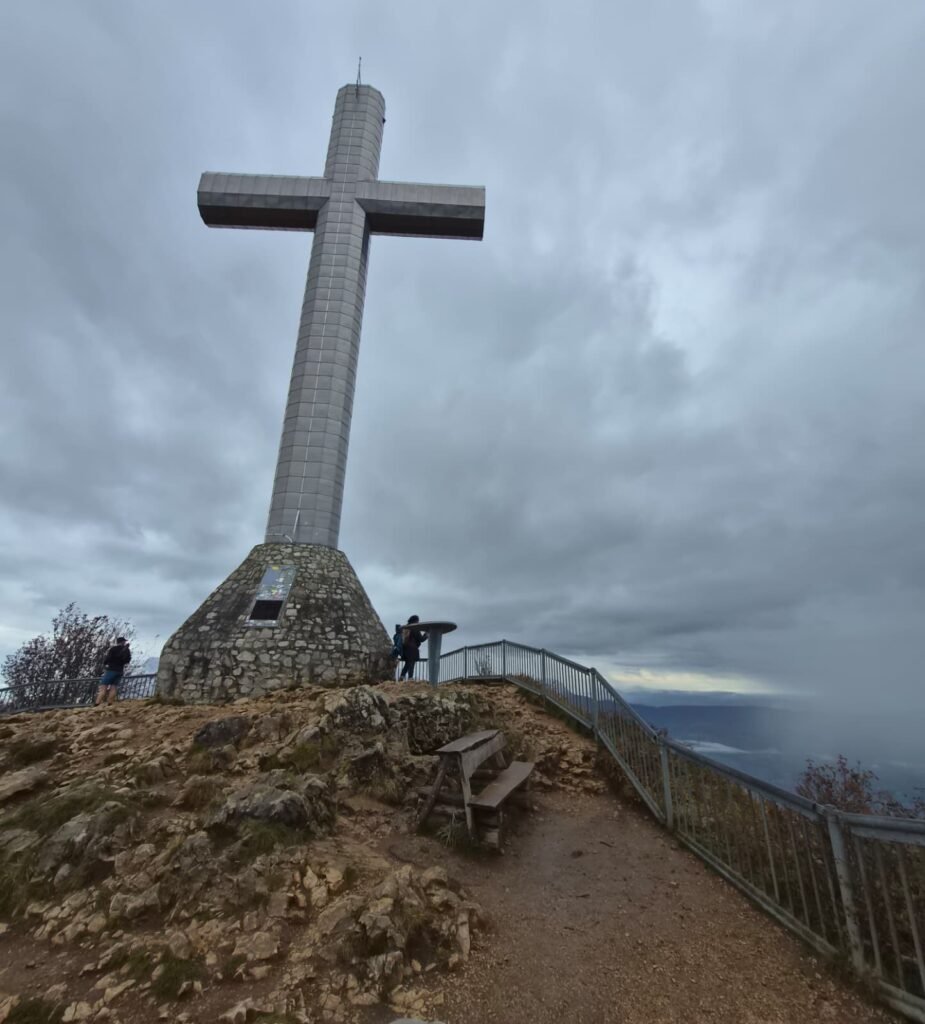
Our destination was La Croix du Nivolet, standing at 1,547 metres above sea level. The enormous cross is a familiar landmark for anyone living around Chambéry, visible from the valley and perched dramatically on the edge of the Bauges massif. Its history goes back to 1861, shortly after Savoie became part of France. The original monument was connected to the relocation of a religious cross from Chambéry, and over the years it endured damage from lightning and severe weather. The present cross, inaugurated in 1911, remains an important part of the region’s religious and cultural heritage.
The summit is also known for its remarkable panorama. On a clear day, you can look towards the Chartreuse massif and the imposing cliffs of Mont Granier, the peaks of Belledonne, the Dent du Chat and the beautiful Lac du Bourget. The surrounding Bauges mountains form part of a landscape shaped by centuries of farming, mountain traditions and village life. That morning, much of the scenery remained hidden behind clouds, but the occasional openings in the mist gave us glimpses of the dramatic landscape. Standing beside the cross, with Chambéry somewhere below us, I was reminded that understanding a destination often begins with learning the stories behind the places we see.
She visited France and didn’t like it. But where did she go?
Somewhere along the trail, our conversation turned to travel. Maureen mentioned a friend who had visited France and returned to Kenya saying she had not liked the country. That immediately raised a question in my mind: where exactly had she visited? Had she spent her entire holiday in Paris, or had she ventured beyond the capital to experience other parts of France?
It was an interesting discussion, particularly because Paris tends to dominate how France is imagined internationally. Of course, it deserves its reputation as a remarkable city, with its architecture, museums, neighbourhoods and rich history. But Paris is also a large, busy capital, and the experience of navigating crowded tourist attractions can be very different from discovering the rhythms of everyday French life. If I were advising someone visiting France for the first time, I would encourage them to enjoy Paris for perhaps three days, then make time to explore at least one or two other regions.
France has an extraordinary diversity of landscapes, cultures, food and traditions. The mountain villages and alpine pastures of Savoie offer a completely different experience from the lavender fields and Mediterranean towns of Provence, the coastal villages of Brittany or the distinctive architecture of Alsace. Travelling beyond the familiar tourist circuit allows you to discover these regional identities, meet people, explore local markets and understand something about how communities live. It is often through these smaller encounters that a destination begins to feel real.
I wondered what Maureen’s friend might have thought of France had she experienced a day like ours. Not necessarily this particular hike, but an opportunity to discover a place away from the usual attractions, where the experience is shaped as much by the landscape and the people you meet as by the destination itself. Perhaps she would still have had her reservations. Travel is personal, after all. But at least she would have seen another side of the country before drawing her conclusions.
The hike she almost missed
By the end of our hike, Maureen’s mood seemed quite different from how the day had begun. She later admitted how refreshed she felt after spending time in the mountains. I found that particularly meaningful, knowing how close she had come to staying behind because of the weather. What started as a reluctant decision had become an experience she appreciated.
It reminded me of something I have come to value through my own experiences of hiking in France. Being outdoors offers more than physical exercise or beautiful scenery. It creates space for conversations, friendships and moments of reflection that are often difficult to find in our busy lives. For those of us living away from our countries of origin, these experiences can also help us build a sense of connection with the places we now call home. Sometimes, the simplest outings become the ones that make us feel more grounded.
A public holiday, closed restaurants and sandwiches in Chambéry
We had also planned to enjoy a nice lunch after the hike. It seemed simple enough. We would descend, find a restaurant around La Féclaz and settle down for a well-deserved meal. What we had not properly considered was that it was 11 November, Armistice Day, a public holiday in France.
We had assumed we would find somewhere open. After all, La Féclaz is a popular mountain destination, and surely there would be somewhere serving lunch. Well, we were wrong. We tried several restaurants, but between the holiday closures and our rather late arrival, nothing worked out. By then, after walking in the cold and rain, we were more than ready for something warm and filling.
Eventually, we gave up on our mountain lunch and drove down to Chambéry city centre. Our anticipated restaurant meal turned into sandwiches from a boulangerie. Not quite what we had imagined, but we were hungry, and at that point, the sandwiches were very welcome. We later found a coffee shop where we settled in and continued our conversations and strategising. It was a pleasant way to round off the afternoon, exchanging ideas over coffee and Maureen had some last-minute shopping to do to surprise her family and friends back in Kenya.
And perhaps there was a little lesson in our failed lunch plans too. Travelling in France means understanding local customs and rhythms, including public holidays and restaurant serving hours. It is worth checking opening times, particularly in smaller mountain destinations and outside the busy tourist season. Sometimes the unexpected becomes part of the experience, although next time I will certainly make a restaurant reservation.
More than a mountain hike
It is experiences like these that continue to shape my thinking around Diaspora Unfolding. France has extraordinary destinations that many international visitors and diaspora communities have yet to discover. Introducing people to these places is not simply about organising trips or visiting attractions. It is about creating opportunities to connect with local landscapes, history, culture and communities, while helping destinations become more welcoming and accessible to new audiences.
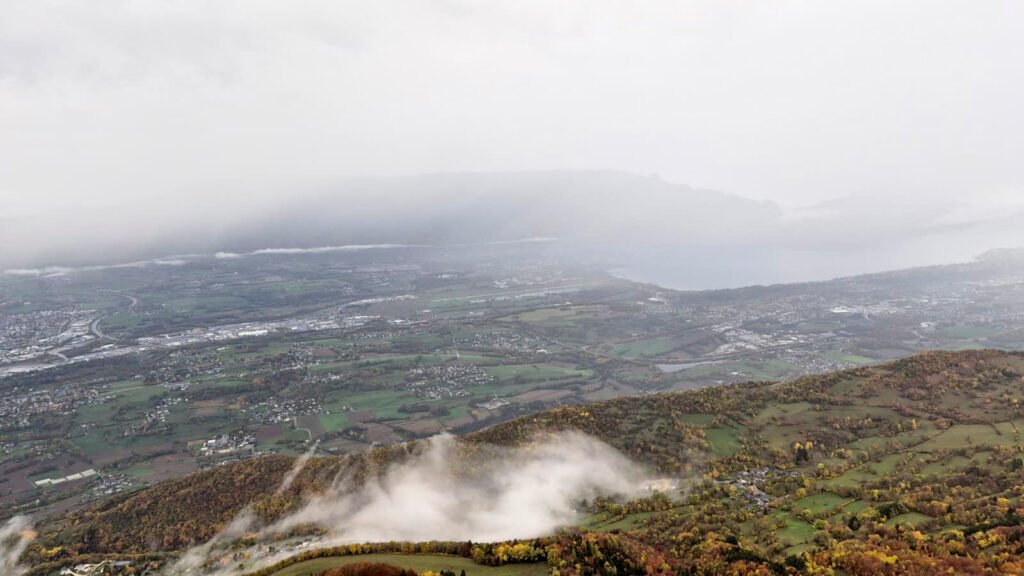
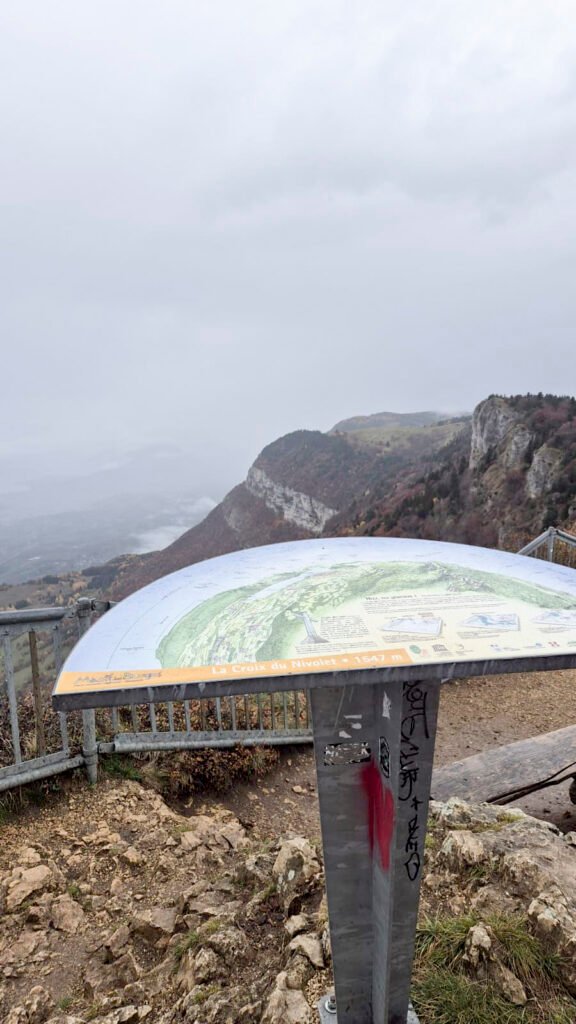
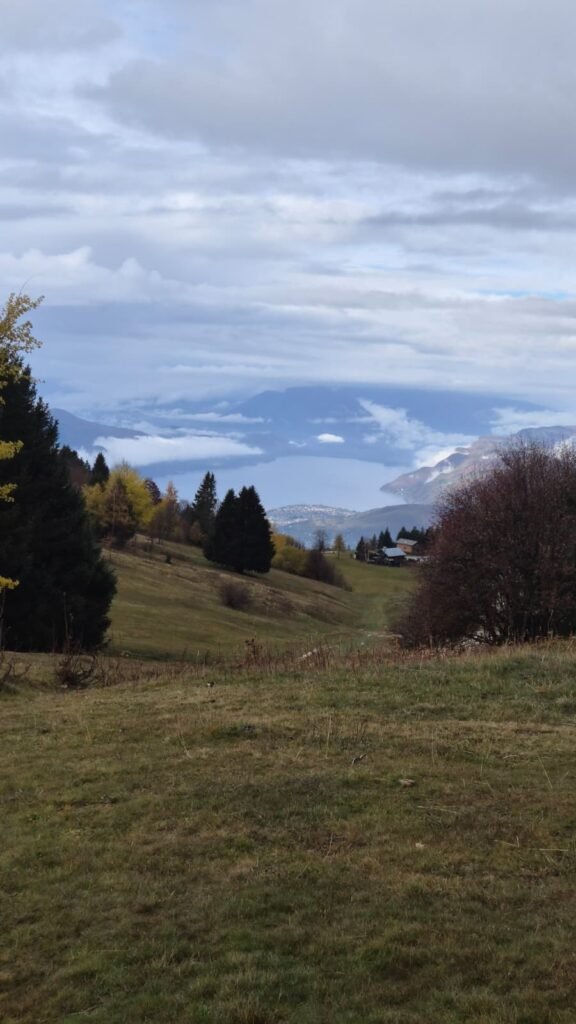
Our day in the Bauges was not a carefully planned tourism experience. The weather was unpredictable, our lunch plans failed, and much of the mountain scenery remained hidden behind clouds. Yet it was a day filled with discovery, friendship, meaningful conversations and a sense of renewal.
So yes, visit Paris. Enjoy its beauty, history and famous landmarks. But don’t stop there. Take time to discover another region, explore a village, walk through a forest or share a meal with local people.
You may find that some of the most memorable experiences of France happen far beyond the places you originally came to see. And sometimes, they begin with three Kenyan women setting off into the rain.


You May Also Like
Chasing Cool Air: Following an Ancient Mountain Pass Above France’s Heatwave
Two Kenyan Women — One, the Mother of a Winter Olympian at 1,926 Mtrs in the French Alps.